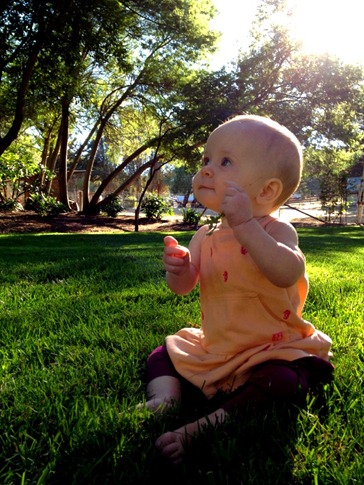
We never made a big bold statement about wanting to produce 100% of our food for ourselves on our land, but the closer we get, the more tempting that goal becomes. Self sufficiency means not only having enough food in the event of a disaster but also not having to worry about the source, production methods and inputs of food bought elsewhere. From grass-fed, pasture-raised, humanely-slaughtered meat to fruits and vegetables without pesticides, genetic modification or passports with more stamps than well… Us!… it can be more exhausting reading labels and/or feeling guilty than just getting outside and planting a few more things in the garden. So, whether we’re preparing for the end of summer or TEOTWAWKI (say “tea-ought-wah-key,” The End of the World As We Know It), we’ve been doing a lot of preserving and some thinking about what services and resources we’re dependent upon.

Planning a garden to provide year-round produce is a tough proposition, but we’re getting better. In addition to adding brussel sprouts and spinach to the broccoli and kale we planted in last year’s Fall garden, we’ve been canning this year’s bounty of tomatoes as they ripen on the vine. Now, it should be mentioned that I hate tomatoes. Well, raw tomatoes. While most backyard gardeners speak in hushed tones of biting into a fresh-picked tomato or popping the cherry variety into their mouths like Skittles, the thought makes me gag. It’s a shame really; I love the aesthetic of the bulbous, striped heirloom varieties and the ease of sitting back while a small, spindly starter plant expands to overwhelm any possible wire cage in which one might try to contain it. I’ve even come to like the sweet smell of the plants, but each time I’m tempted to try one of the bright red fruits, they just don’t do it for me. Fortunately, with a little help in the kitchen, these repulsive, squishy, seedy orbs can actually be turned into something delicious. Yes, it’s true!
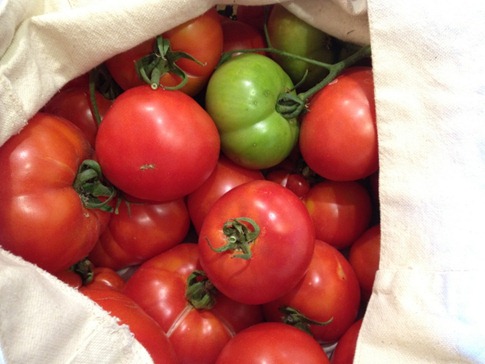
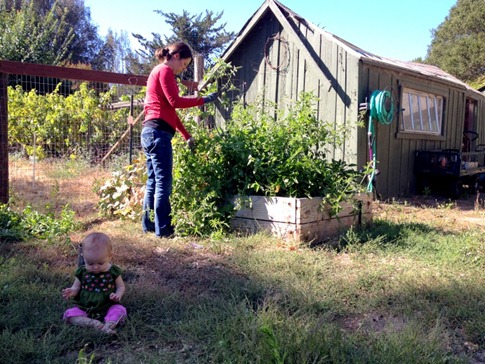
From our 4 Roma plants and 2 Beefsteaks, we’ve thus far diced and canned something like 15 quart-size jars worth, layered in with fresh basil. We use a standard water bath canning process with some lemon juice added to increase acidity and prevent bacterial growth.

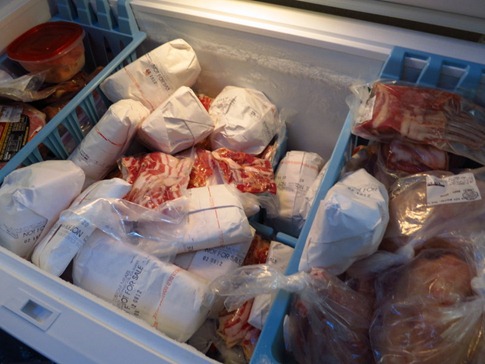
And store them in a broken old chest freezer we got off Craigslist where they stay cool and dark.

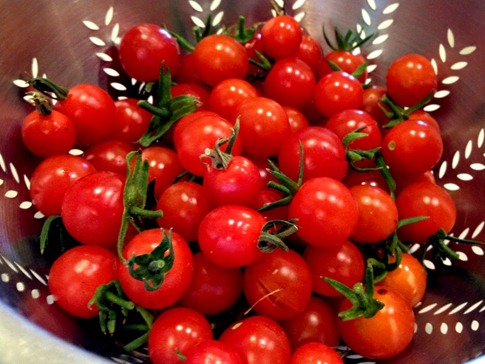
And from the two cherry tomatoes plants, we’ve been drying them halved with a sprinkle of olive oil and salt and pepper on some parchment in the oven (5+ hours at 170 until the consistency of raisins). The instructions we followed claimed they’d stay good in the fridge for 6 months!
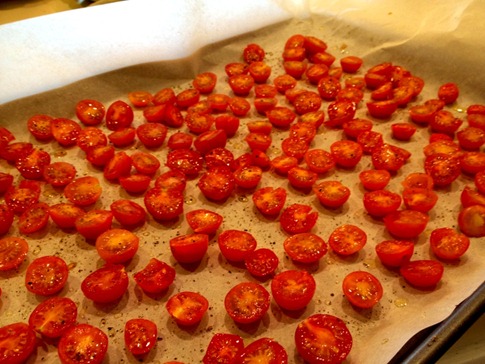
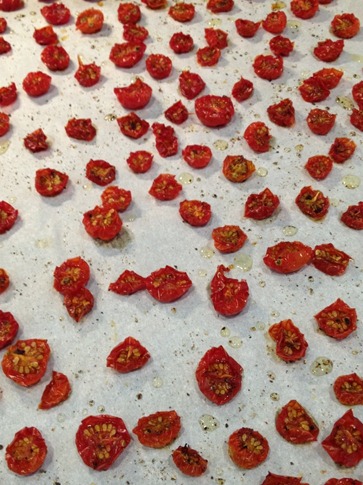
Great on homemade pizza. Yep, the dough recipe is from my lazy baking bible, Artisan Bread in Five Minutes a Day. One batch of dough makes about two large pizzas, though we typically wrap half in plastic and put it in the freezer to be defrosted on the next pizza night. The basil’s from the garden but the pepperoni, pork sausage and artichoke hearts were “outsourced.” Don’t worry, our artichokes should be ready this Spring and you can read about “pork plans” later in this post, so this combo should be available at the TEOTWAWKI party even if civilization is crumbling and societal fabric has been torn shreds.
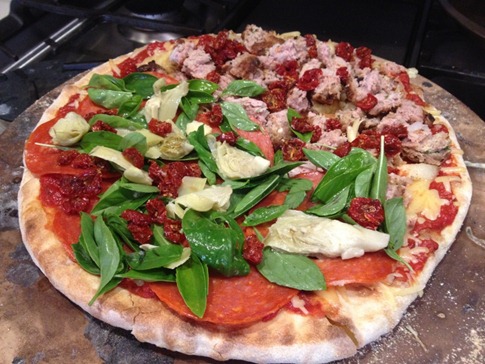
Note that we pre-baked the crust on the above pie for about 5 mins before loading it up with toppings. Here it’s on our well-used pizza stone ready to go back in for 15 minutes at 550.
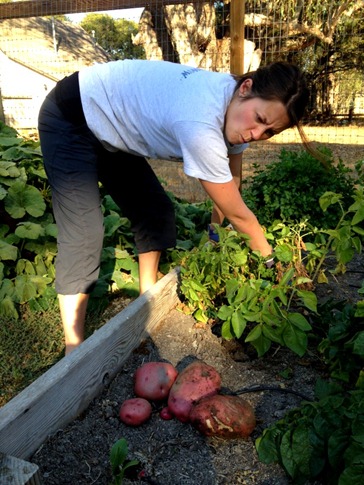
I think these potatoes may have gotten a little overbaked. Huge!
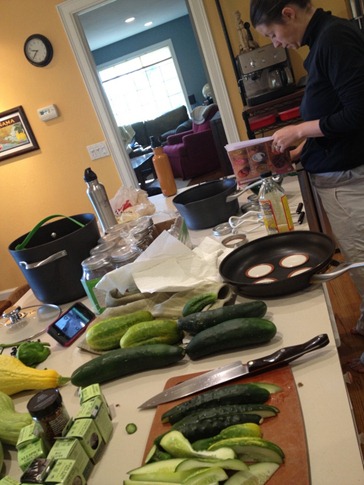
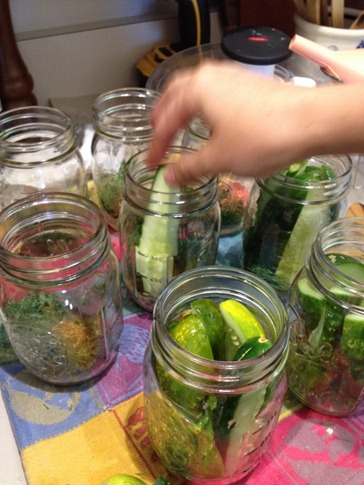
Okay, pickles aren’t much of a survival food but they’re delicious. Actually, if we’re being honest, this particular batch was terrible. Ann went with a complex cocktail of expensive and exotic spices that came from Whole Foods in tiny plastic bags, but something was way too strong. Later batches were a more simple dill recipe. Next year, we’ll try to pick our pickles (called a “peck” or is that peppers?) when they’re a little smaller so they can be canned whole to stay a little crunchier. We also wanna try this recipe for pickling a variety of miniature squash.
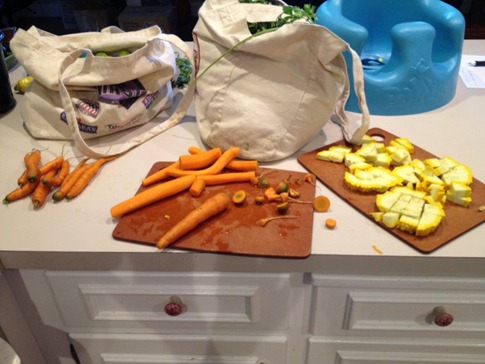
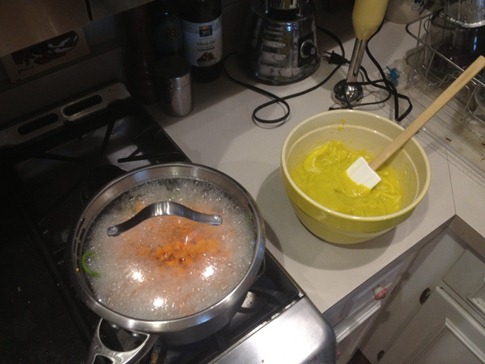
In the rest of the garden, we’re just trying to figure out how to preserve things as they become ripe. Strawberries get halved and shaken in a Ziploc bag with some sugar that’s supposed to help them keep their color and are tossed into the freezer for smoothies or desserts. Basil is ground up in the food processor with some olive oil, salt and pine nuts (we prefer to leave out the garlic to improve family relations) and packaged in small jars for easy-access pesto. And of course, we’re not the only ones who need to eat, so squash, carrots and peas are steamed, blended (though we have a fancy food mill, Ann found this little hand mixer she swears by – cool colors too) and poured into ice cube trays. When it’s time to see how much food we can get into Wynne’s mouth as opposed to on her face, we put one cube in a glass dish into the microwave for 30 seconds and it’s ready to go.

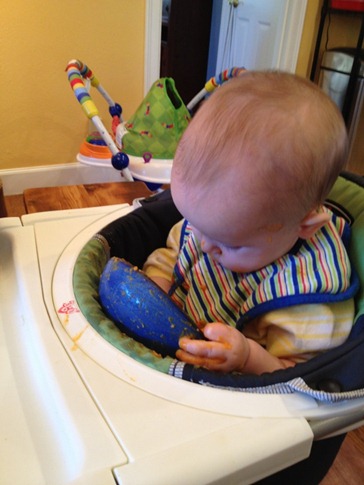

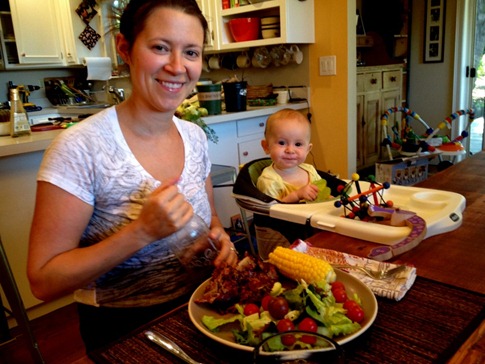
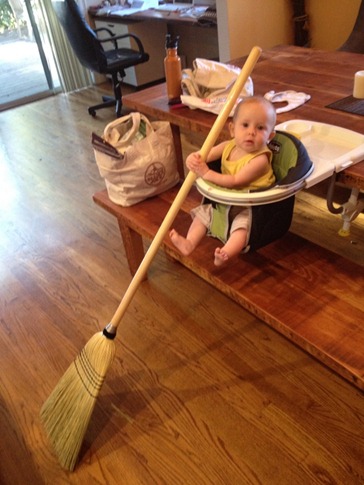
Of course, some always ends up on the floor so a little cleanup is necessary.
For something a little more substantial (sorry vegetarians, our bodies just don’t function as well without animal protein), last year we raised two Berkshire pigs. Since February, we’ve been happily pulling delicious and ethically satisfying cuts of meat out of our freezer. The societal opinion of pork seems to run the spectrum from “the other white meat” to bacon as an immediate precursor to life threatening chest pains. The primary, if not only, meat we consume, we’ve been enjoying it as more substantial and better texture than chicken with a lighter and more versatile taste than beef. It might have been interesting to have established a “Supersize Me” style benchmark for our cholesterol, blood pressure and other measurements of health before embarking on this diet, but the fact is, we feel healthy and good about the meat we’re consuming and plan to raise four Berkshires this year so a couple friends can stock their freezers as well. We personally don’t think pork is better or worse than any other lean, healthily-raised meat when consumed in moderation.
But what do we really care anyway? TEOTWAWKI is coming soon, right? Actually, according to the Mayan calendar, on December 21, 2012 to be exact. While none of the difficult-to-translate references to this date in stone carvings recovered from ruins seems to indicate exactly what the “end of days” will look like, my best guess is that it will resemble the day I was repeatedly bitten by fire ants while camping near the ancient Maya city of Palenque. In hindsight, it’s possible that King Yuknoom Yich’aak K’ahk’ was trying to warn me, although all I really got out of it was this sweet picture of full body hives and a really nervous wife checking my breathing all night.
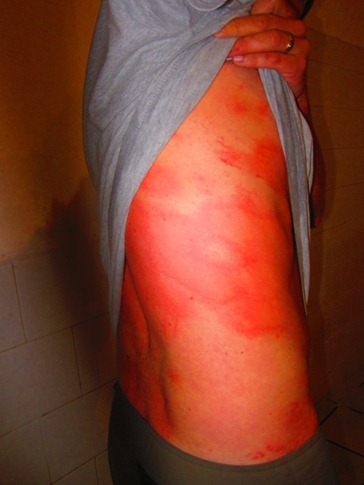
Wait, it’s all starting to come together now! Just a few weeks after this pic, we went to Tikal, home the arch adversaries of the northern Maya king, and what happened? We forgot a water bottle underneath the steep stairs at Templo V, and when Ann went back for the bottle just as dusk was setting in, a group of Coatimundi ran across her path, scaring the hell out of her. Where were they all going? In hindsight, it seems clear they were all out looking for something to use to replace the severed head of Hunahpu, one of the Hero Twins, who - DO I HAVE TO SPELL THIS OUT FOR YOU PEOPLE?! – according to Mayan mythology, lost it when the gods of Xibalba (the underworld) cheated during a ceremonial ball game (it was “cut off by the giant killer bat, Camazotz, with his razor beak”). And ultimately, what did those coatimundi find that, when placed upon the neck of Hunahpu, assumed his facial features and allowed him to triumph in the game?
Wait for it…
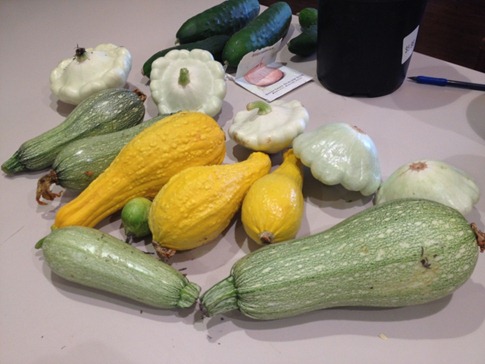
Yes, a squash. BOOM! And who do you know who has more effin’ squash than they know what to do with?
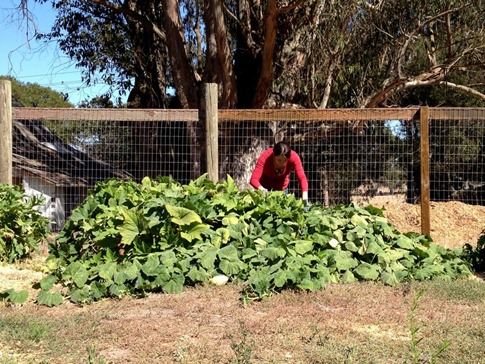
Exactly, US! In retrospect, I fear we may have overlooked a timely opportunity to save the world. Ooops, our bad.
Well, whether we witness the end of time itself a few days before this Christmas (which may not sound so bad after couple hours of Christmas music at the mall), we’ve been wanting to be a little more prepared for the possibility of being “off the grid” for days at a time due to an earthquake, severe storm or “other.” We’re not necessarily worried about TEOTWAWKI, but it seems like a good idea to be somewhat prepared for a SHTF situation (read this, “SHTF vs TEOTWAWKI,” it’s funny).
In addition to food which we’ve gotten a decent start on above, we’ve been looking into uninterruptible access to water, power and fuel and have found that they are all are related. For heat and cooking, we have access to plenty of firewood, propane BBQ’s and camping cooking stoves, but fuel is also needed to generate electricity. While we get our water from a well, an electric pump is required to draw the water up from 120 feet below our property and fill a 5000 gallon storage tank. Another electric pump fills an air tank to provide water pressure to the house. In the case of a power outage, water would still flow by gravity from the storage tank located slightly upslope from the house, or we could power the pressure tank pump with a small generator. Based on the assumption that the average person uses about 100 gallons of water a day on the upper end, the contents of the storage tank would last us a few weeks if we shut off irrigation to the landscaping and much longer if we conserved. While the well pump that refills the tank is only 1 horsepower (+/- 700 watts), this type of pump requires a much higher wattage to start – closer to 4000 watts – and would require a much larger generator to operate (not to mention 220V), so we’d be better of just relying on the stored capacity.
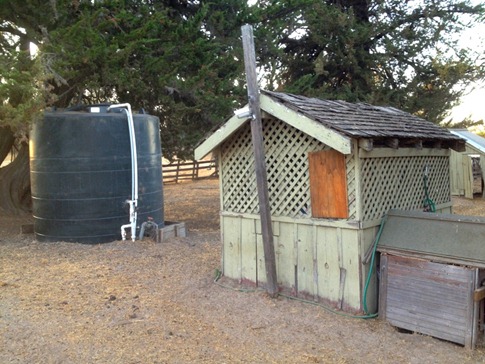
Don’t worry, the automatic cat food feeder that drops Petunia’s food into the small doghouse at right runs on batteries so will not be affected by the apocalypse.
According to our online account with our power company, we typically use a range of 1-4 kW per hour in our daily lives. So that could be thought of as 10 to 40 100W lightbulbs. When you factor in computers (and wireless routers and cable modems), TV usage at night, the constant operation of the fridge and freezer, a pond pump, power tools and actual lightbulbs, it seems about right. It’s interesting to note when looking at usage by hour that our highest usage is in the morning and the late evening when our irrigation timers are set to run, thus triggering the well pump to replenish the storage tank. In “survival mode,” the real essentials would be the fridge and freezer with our supply of meat and preserved food. According to the manufacturers specifications, the fridge averages just under 2kW per day and the freezer around 1kW a day, each less than a 100W bulb. Add a few lights, maybe phone chargers and a radio to get information, and it seems that a 2000 watt generator would be enough to provide the power we would need. Small, portable, quiet units can be had from Honda in this power range for about $1200 and coincidentally, are the exact units many of the Airstream owners with trailers close to the size of ours recommend. An added benefit is that additional units can be wired in parallel to double the capacity, allowing either the flexibility of using one generator in one location and another elsewhere or using them together to run more power hungry devices in the house.
To get power from the generator to the house, a transfer switch is required. This device is installed beside the main electrical panel and allows you to control which circuits are powered by the generator. It also prevents backflow of power from the generator to the electrical grid which can be dangerous. Note that we’ve also looked into solar power systems, both for day-to-day use as well as for emergencies, and found that the initial cost of the equipment plus the number of batteries that would be needed to store energy for when the sun wasn’t shining (night, weather or dust cloud from asteroid strike!) would be way too expensive. While the concept of every home or business having it’s own “power plant” on its roof sounds independent and romantic, my feeling for long term power for a community, central, consolidated power production would be more efficient and could be located in optimal areas as opposed to installation and maintenance of hundreds of thousands of disparate and less robust systems spread across multiple locations and environments. It reminds me a little of the movement of both business and personal Internet services from in-house servers and local storage to colocation facilities and cloud storage. While it’s not all “homesteady,” I just know from experience that sometimes it’s best to leave more complicated operations to professionals with experience and the ability to focus on one thing. But that’s not to say we wouldn’t want a backup.
So we’ve determined that without power, we can’t keep food fresh or get water pressure, and without fuel, we can’t provide power. At maximum capacity, the 2000W generator I mentioned above can run for 4 hours on a 1 gallon tank of gas. Estimates on the nut job survival enthusiast forums seem to suggest that running the freezer and fridge for 3-5 hours a day would be enough to keep them cold, but for the purpose of estimation, let’s assume the generator runs 8 hours a day. Running two units in parallel or possibly upgrading to a dedicated 4000W unit would double fuel consumption, so if we figured 4 gallons of gas a day, we’d be well covered. Of course, it completely depends on what exactly we’re “prepping” for, but if we were to allow – oh, I don’t know - two weeks for the reestablishment of civilization, we would want to have 54 gallons on hand. One 55 gallon steel barrel with a hand pump should do the trick, although figuring out how to fill it could be interesting. With this store of fuel, I suppose we’d have the option of staying put for those two weeks or spending a week evaluating and then filling the tank of one of the cars and hitting the road.

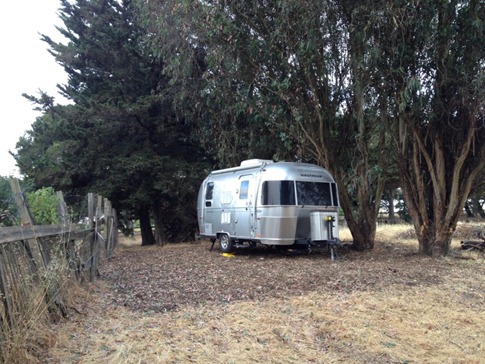
And speaking of hitting the road, I haven’t even mentioned our shiny silver escape capsule, the Airstream. As a backup to our backups, our little studio apartment on wheels actually has water, propane refrigeration and a few days of battery power that could be replenished either by a solar panel, a tow vehicle or portable generator. We could pretty much move out to the “back two” (the 4 acre version of “the back forty”) and be comfortable. Plus it’s usually pretty well stocked with whiskey from the last music festival we dragged it to!
The fact is, we don’t really live our daily lives thinking that something is going to happen to cut off our access to food, water, power and fuel. And we also haven’t committed ourselves to living off the grid or completely detached from the the food system. We love being connected to the Internet, going online to pay bills, checking the ChickenCam to see if everyone’s on their roosts just before sunset or downloading the latest episode of an addictive cable series.
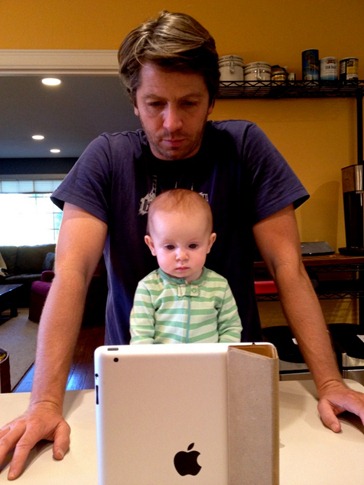
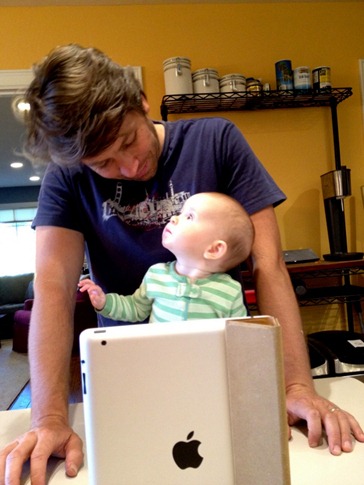
But we also appreciate knowing that we could live without it, either by choice or necessity. And while we’re enjoying the satisfaction we’re getting from learning skills like food preservation and becoming more aware of our resource consumption, we’re also creating the kind of environment we’re excited to raise a kid in.