Saturday, May 31, 2014

Re-deciding on a New Tow Vehicle

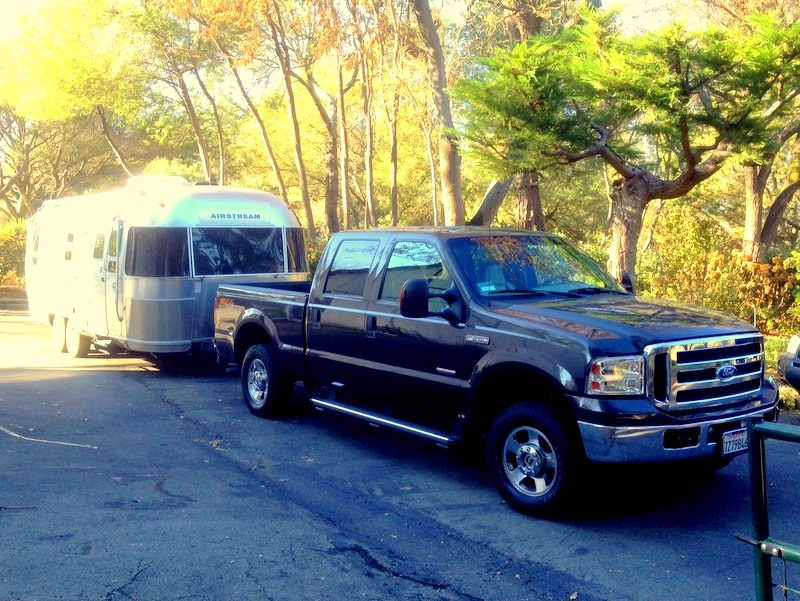
We’d done so much research into buying a new tow vehicle – payloads, tow ratings, cargo space, overall size – but now that we’d been using the 2006 Ford F250 Lariat Crew Cab we’d chosen for the past 6 months, we weren’t so sure. Despite our best efforts to rationalize it – Look! I bought some hay and put it in the back of the truck! This is going to be perfect if we ever need pick up pigs again! – we also suffered through a daily negotiation between it and our Toyota Highlander Hybrid, each of us lobbying based on who needed to drive the farthest or park the tightest in an effort to avoid having to drive the stinky, rumbling monster. 

IMG_0325

And in truth, we’d picked up four pigs last year in our old 2006 Sequoia, and I’d loaded the same number of bales of alfalfa in the back as I could fit in the truck with the cap on. We’d only sold our old Sequoia because our new trailer’s max weight exceeded its tow rating by a 100 lbs. Plus, we’d convinced ourselves that we needed a big 3/4 ton to haul around everything we’d need for extended trips, and one of us (I don’t really think it’s important who) was hanging onto the idea that we might want to carry a motorcycle while towing or stick a pop a truck camper on the back and head to Baja. (Silly, Ann.)

DSC_2824

There was a great article I saw (but sadly cannot find for you now) about packing a backpack for a round-the-world trip that offered some advice that really stuck with me; It said, choose the backpack you want to be carrying everywhere you go for the foreseeable future, and only pack what you can fit and carry comfortably in it. We needed to be able to take our “backpack” into garages at aquariums and museums, into tight downtowns in cities, to park in small town mainstreets or up twisting, rocky, dirt roads. We were coming around to the fact that more space meant more stuff, stuff we likely didn’t really need, and that the size of the truck could end up actually limiting us. Oh, and did I mention we both hated driving it? Given the adventures we have planned for the coming years, both in the trailer and out, and the fact that we’ll soon be adding second child into the mix, I was starting to feel like I could live without a motorcycle in the bed or the promise of washboarding a truck camper to pieces on a dirt road in Baja. (I mean, Ann could live without those things. Ann.)

But, of course, the two non-negotiable criteria for a tow vehicle are towing prowess and reliability. I’m afraid the memory of being stuck on the side of 6th St in a crippled F250 with a hungry and tired two-year-old while plans of towing our trailer into the mountains to see friends fading before my eyes is going to go a long way towards shaping my feelings on the latter, but there was no denying the towing abilities of the big truck. The question was, could something smaller tow as well?

It just so happened that across the street from the Ford service center where I’d left our sputtering F250 was a gleaming Toyota dealership. It also happened that while waiting to pay the $2500 to retrieve our monster truck, I may have “accidentally” searched CraigsList to check the prices on the new generation Toyota Sequoias that were getting good reviews for towing and boasted an increased capacity and found one right across the street. It couldn’t hurt to walk over and take it for a little spin, could it? 

Compared the F250, the Sequoia felt like a sports car. Nice acceleration. Smooth. Quiet. Interior with all the bells and whistles. Pulling back into the dealer’s lot after the test drive, I swung into a parking spot between two shining vehicles with balloons tied to the mirrors without giving the size a second thought. What a difference. Of course, as much as we’d like to have something like this, I explained to the salesman, we plan on doing a lot of towing and aren’t really sure it would be up to it. “Take this one home for a couple hours, hook it up to your trailer and see how it feels.” I was not expecting that. This guy was gooood.

IMG_2291

At home, I set up the Equalizer weight distribution hitch for the borrowed Sequoia and eased the combination out of the driveway. The standard thing that people say about tow vehicles they love is “It felt like the trailer wasn’t even there!” Now, I’ve always said the F250 drives the same whether it’s hitched to a 6000 lb trailer or not, but the difference is, it’s just sluggish either way. With this new Sequoia, honestly, the only problem I had was remembering to slow down enough around turns so I didn’t whip the trailer around. After a 30 minute test tow over a few good inclines on the road towards the coast, I had absolutely zero reservations about it as a tow vehicle. And after the drive back to the dealership to drop it off, I had no doubts that this was a much better fit for us than the F250.

I sat down with the sales guy to get some preliminary numbers on a 2014 model that had a few interesting features like a new sway control system borrowed from the Tundra trucks. He returned with a quote for the full MSRP and $15,000 to trade-in the truck. This guy really *was* good. He proceeded to explain to me that the trade-in was low because these F250’s were notorious for engine problems. I explained to him that that was strange since when I’d been shopping for the truck 6 months ago, they’d had one on the lot priced at $34,000 and had told me they needed to price it there because of what they’d paid for it as a trade-in. He kinda laughed and started to backpeddle until I let him off the hook and told him there was no way they were going offer me a trade-in value that would make it worth my while not to sell it myself on CraigsList.

Now for the price of the new car. He explained that they only had two of them on the lot and there really wasn’t much he could do to lower the price below MSRP. I told him I understood completely and would just go home and call every dealer in Northern California and tell them I would buy a 2014 Sequoia this week from whoever had the best price. As I stood up, he hastily mentioned that, of course, they would match any price from another dealer.

So over the next week, I did exactly what I told him I’d do. And, what do you know, each time I mentioned to a dealer that I had a quote from a competitor, they would come down $500. And so would the next guy. And so would the next guy. By the time we got about 9% below MSRP, I was feeling pretty satisfied. I called the first sales guy and told him I’d found the exact car with the color and options we wanted at a neighboring dealership and would come in the next day to sign the deal if they could acquire it and sell it to me for the lowest price I’d gotten. He agreed.

The next day sitting across from the sales guy at his desk, the manager stopped by to “graciously” shake my hand and make sure my experience at his dealership had been everything I’d hoped it would be. I said, “Well, actually, a few days ago you offered me an offensive amount for my trade-in, tried to get me to pay MSRP for a new vehicle and then claimed there was nothing you do about either, so, well, it’s pretty much what I expected, but I can’t say it’s what I’d hoped for.” I tend to say things like that with a bit of a smirk, so nervous glances and awkward weight shifting was about all the response I got.

I picked up our new Sequoia a couple days later, and despite having an appointment, sat around for 20 minutes waiting for it. The sales guy kept poking his head out and saying it would only be a couple more minutes, adding that he’d had them detail it the night before, but that he hadn’t been satisfied with a few things and sent it back to them this morning. I explained that approximately 15 minutes after I left the dealership, a two-year-old would begin fondling every inch of leather with hands slathered in a deep orange-colored, paste compound formed from the dust of goldfish crackers and saliva and that I didn’t really need it perfect. He asked if I could bring it back later in the week to have them detail it again. I told him it would be even better if I could bring it back and 6 months and have them do it. I’m gonna take the nervous laughter as a “yes.”

That Friday, I took a buncha good pictures of the F250 and wrote up a CraigsList Ad. I had a deal with the first person I showed it to for $10K over the trade-in offer by the end of the day on Saturday. In the end, we definitely took a hit on the truck (and of course, on the new Sequoia), but after a week or two of driving it around town and knowing what it felt like with the trailer behind it, we’re incredibly happy with our (re)decision. 

IMG_2288

Thursday, May 15, 2014

It’s been a hell of a day

It’s been a hell of day. Right off the bat, I sacrificed one of the mornings I usually get to sleep in while Ann gets up with the toddler, instead shuttling arm-fulls of last minute items out to the Airstream for the weekend we had planned with friends up in the foothills of the Sierra Nevadas. After breakfast, potty checks and a half-hearted attempt to tame the persistent wispy bed head, Ann had Wynne out the door to her school, and I got to work installing the last drawer and two missing drawer fronts on the trailer kitchen I’d been refinishing over the course of the last 4 months.

In a flash, two hours had passed, and I was rushing out the door to pick Wynne up so we could get on the road. Ann had taken our smaller car to the grocery store and left me the truck, a 2006 F250 we’d bought about 6 months earlier after much deliberation to pull the new trailer, although I couldn’t hitch everything up until after the school pickup. I drove there in a daze, wondering if I could steal a couple seconds in the parking lot to post a pic of the almost finished kitchen to Instagram.

On the way home, I quizzed Wynne about her day, who she played with and what they’d had for snack. At a stop light on 6th St, she complained that she’d dropped the granola bar I’d given her to tide her over until lunch. I slipped the gear shift into park and reached behind me into the cavernous backseat of the F250 to grab the bar from the footwell and hand it to her. When I put it back into D, the truck sputtered. I gave it some gas and could hear the big diesel motor clanging and searching for a rhythm as the truck only crawled forward. I yelled something very loudly that I later had to convince my two year daughter had merely been daddy saying the word “TRUCK!”

I had actually seen this behavior only a few days before and, at that time, thought I had a perfect explanation; Soon after buying the truck, I started running biodiesel fuel supplied by a local company and made from locally sourced used vegetable oil from fryers. It was the perfect guilt-alleviation for having purchased such a big truck and had been a large part of our decision to go with this particular somewhat trouble-prone engine, the Powerstroke 6.0. The engine was said to run well on biodiesel, in fact so well that I could expect the more viscous biodiesel to actually clean out almost 10 years of deposits left by the petro-diesel. As such, I was told I would need to change my fuel filters after a few tanks or a couple months to remove some of the gunk.

The last time the truck had sputtered on me, I limped it back home and pulled the replacement filters and special socket I had ordered online from where they’d been rattling around in the bed for a few months. With my phone beside me playing a How-To video on changing the fuel filters, I slid on my back under the driver’s side, marveling at how convenient the ground clearance made it to work. I quickly found the first fuel filter and started to loosen it, attempting to catch as much leaking fuel as possible in the basin I’d dragged under with me, but happy that at least it was biodiesel dripping down my hands and arms. I pulled an almost black filter out and replaced it with the new white one, lubed the new o-ring and screwed everything back into place. I repeated the same process with the secondary fuel filter under the hood which was equally dirty. After priming the system with a few partial turns of the key to let the fuel pump fill the filters, the big diesel had fired up immediately and ran as quietly and smoothly as I’d ever experienced.

So that brings us back the side of the road on 6th St. where I’d been hoping to get Wynne home, fed lunch and in the truck with the trailer hitched in time for 3 blissful hours of quiet driving towards the foothills. As I managed to get the truck to lurch forward and start to limp towards home, I felt that plan slipping away.

Through our travels in the Airstream with a young child, our 10,000 mile drive from San Francisco to Panama before she was born and a brand new BMW adventure bike that had left me stranded at the end of a three week trip, we’ve learned the necessity of staying positive and flexible when facing challenges on the road. The one thing Ann and I completely agreed on was that after packing late into the night before and moving all of our daily essentials out into the trailer that morning, one way or another, we were sleeping in the Airstream tonight, even if it had to be in our driveway. A quick call to my brother and the promise of a favor to be named later, and I’d arranged use of his 2004 GMC Yukon XL for the weekend.

I hopped back in the F250 which was running, but only reluctantly, and tried to coast as much of the way as I could the 5 miles to the Ford dealership. The techs rolled their eyes a bit at the mention of biodiesel but were optimistic when I mentioned that I could still hear the turbo spinning up and the check engine light had never come on. Outside while waiting for the courtesy shuttle, and older gentleman struck up a conversation.

“Looks a lot like my truck. What year?”

“’06,” I replied.

“Yep, same as mine. Spent about as much time here in the shop as it has out on the road.”

“Oh yeah?”

“Head gaskets, EGR cooler, fuel pumps, injectors, you name it. Lucky most of it happened while it was under warranty.”

“Thanks for the pep talk,” was all I could think to say as I got into the shuttle.

Almost home after a two hour round trip south to my brother’s house, I heard back from the dealer. The fuel pump would need to be replaced. When I asked if this was common, he laughed and said that in the couple months he’d been at the dealership, he’d seen more than 10. $1500 installed. Awesome.

Back home, I lowered the trailer hitch onto the ball of the Yukon and watched as the rear end sank. Of course, I was going to have to completely re-setup the Equalizer weight distribution hitch for the new vehicle. In the full afternoon sun, I removed the large bolts holding the head of the hitch to the shank and moved it to the highest position. I raised the brackets on the A-frame of the trailer a couple holes as well, and with the bars in place, had remedied a good bit of the dip by the end of a half an hour of work and about a gallon of sweat. 

It was now 5:30. When we’re on the road, we’ve usually already been in camp for an hour, starting Wynne’s dinner and setting the trailer up for her 7:00 bed time. I looked at Ann, feeling defeated after a long day of obstacles and waiting for her to point out the obvious; We weren’t going anywhere this late. Instead, she said she was still game, and when I suggested a short drive just 35 minutes out to the coast, she strapped Wynne in, and we were pulling out the driveway minutes later.

At the top of a hill leading down to the Doran Beach Campground, part of the Sonoma Coast State Park, we were welcomed by a large CAMPGROUND FULL sign. Of course, we’d seen a very similar sign at Wright’s Beach a few weeks before when we ultimately scored a prized beachfront site after an early morning cancellation, so we just ignored it. In fact, we’ve pretty much always had luck with this approach, even at Joshua Tree on the way south to the Mexican border. At the kiosk, the ranger reported that despite the sign, several first-come first-served were available and, in fact, many reservable sites were also open as long as we only needed one night. So, maybe time to put out the CAMPGROUND (not at all) FULL sign?

As soon as I’d backed into our site, a guy walked up and introduced himself, adding that he had the 23’ Airstream Safari parked at the other end of the campground and had seen us drive in. A nice welcome and a beautiful spot. It was feeling like we’d made the right choice. Seeing the sand all around the site, Wynne agreed and insisted I dig her wagon filled with sand toys out of the back of the hastily-packed Yukon immediately.

IMG_2072

IMG_2080

IMG_2082

IMG_2092

With homemade lasagna being thawed on the stovetop since I’ve still not been able to successfully light the stove in the new trailer, we dropped Wynne into the 6 inches of water in the bottom of the shower that we call “a bath.” With some sunset pictures, a nice dinner and an exhausted toddler willingly sinking into her porta-crib placed behind the divider curtain on our bed, we watched one of the last suspenseful episodes of season 3 of Homeland and then turned in ourselves.

IMG_2096

IMG_2100

The screaming started at 3:00 am. Not common for Wynne to wake up in the middle of the night, but not completely unheard of either. I sleepily stumbled out into the kitchen area to find her standing in the porta-crib we’d moved while she was sleeping onto the converted dinette. At that hour, I couldn’t find the words or will to effectively deny her emphatic request to “sleep in mama dada bed.” I scooped her up with her pillow, blanket and a selection of stuffed animals and dropped her into my spot in bed beside Ann. I grabbed my pillow and one of the sleeping bags we use to stuff a zippered throw pillow and spread everything out on the lounge.

In about 6 weeks, we’re expecting our second child. And about 6 weeks after that, assuming everyone’s healthy and happy, we’re talking about hitting the road for another extended trip in the trailer. We know there are going to be sleepless nights like these, especially with a newborn. We know there are going to be hell days like this one’s been. And we know it won’t always (ever?) be easy. But lying in the darkness in my sleeping bag on the lounge listening to Wynne and Ann talking only 10 feet away on the other side of a thick velvet curtain with the electronic foghorn on the point of Bodega Head alternating in the background –

“Winnie’s camping?”

“Yes, Winnie’s camping.”

“Winnie’s in my taila?”

“Yes, Winnie’s in her trailer.” 

“Winnie’s sleeping in my big taila?”

“Yes, Winnie’s sleeping in her big trailer.”

- all I could think about was how happy I was to be out in the world, seeing somewhere beautiful even if it did happen to only be several miles from home, and spending this close time with my family. The challenges of the day were nothing compared to the reward. With a smile on my face, I dozed off to sleep thinking, this has been a hell of a day.

Sunday, December 1, 2013

Deciding on a New Tow Vehicle

In researching a new tow vehicle for our recently acquired 2005 25’ CCD Airstream, I spent a lot of time on the forums, both for each prospective truck and for Airstreams in general. I also reached out to a number of full-time (or close to it) Airstreamers for their thoughts. Unfortunately, there’s just not a clear answer. Discussion threads are equally inhabited by those who would say that today’s 1/2 ton pickups are so much more powerful than those of the past that they could easily handle a 25’, 6300 lb trailer and those who would claim that doing so would put not only one’s family but everyone else out on the road in grave danger. We talked to Airstreamers who’ve happily towed tens of thousands of miles with 1/2 tons and others who have upgraded to a 3/4 and say there’s no comparison.

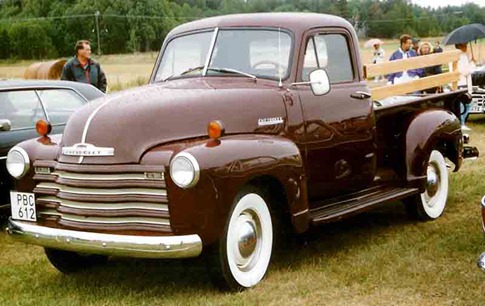
You may remember that I did my best last year to convince myself I need one of these to bring home our latest batch of heritage piglets, but that wasn’t going to work here…

In making the choice, the issue is not typically tow rating, though there’s plenty of debate about how those numbers are derived. Instead it’s about payload. The term “1/2 ton truck” refers to the ability of early trucks to carry 1,000 lbs, one half of one ton. That number includes passengers, cargo and, depending on who you talk to, gasoline and other fluids. With most trucks that fall into that class today, payloads are listed closer to 1,500 lbs, although that also varies with trim levels (DVD players, leather seats, wood trim, moonroofs, etc all add weight to the truck). But things become really interesting when one starts to actually run the numbers on expected payload while towing.

P_Airstream

The largest load comes from the trailer resting on the hitch, referred to as tongue weight. A very rough rule of thumb puts tongue weight at about 10% of trailer weight, although most agree that 15% is closer to reality for a fully loaded trailer “ready to camp.” In our case, we’re likely looking at a tongue weight in the 900 lb range. While a weight distributing hitch can transfer that weight off the rear axle, it still needs to be carried by the truck and therefore counts towards payload. In a modern 1/2 ton truck with a 1,500 lb payload, we’d be left with 600 lbs of capacity immediately after hitching up. Subtract two adults (300 lbs combined, but I’d rather not specify exact allocations), a baby and seat (50 lbs), Gorilla and some misc in the cab (another 50 lbs), and we’d only have 200 lbs left. Two 7 gallon water jugs at 56 lbs each and we’d be down below 100 lbs before even packing the generator, portable solar panel, DC fridge, tool kit, two bikes and a baby bike seat, the Bob stroller, Wynne’s tricycle, the Weber BabyQ, camp chairs, folding camp table not to mention some room for the family to grow. Oh, and that doesn’t even factor in the weight of the truck cap (another 200 lbs at least).

badidea1

While there a few options to increase the payload up towards 2,000 lbs like Ford’s MaxPayload Package for the F150, it’s only available on newer models with the 6.5’ bed and is pretty hard to find. We’d not only be looking at a very expensive truck but one that’s just as long as a 3/4 ton and might still be over capacity. While it’s unlikely that the axles would snap the second we tossed another pound of frozen pork into the fridge, in the end, we decided that a 3/4 ton truck with a 6.5’ bed and around 2,900 lbs of payload would give us the ability to bring the things with us that we wanted while offering the confidence we were looking for while towing. Of course, the downside is that we’ll have a behemoth as a second car, and we may ultimately decide to get a cheap, fuel-efficient beater for the rare occasions Ann and I are not together. Then again, where we live out in the country, a 3/4 ton crew cab is basically considered a mid-size car.

PICT4265-700x525

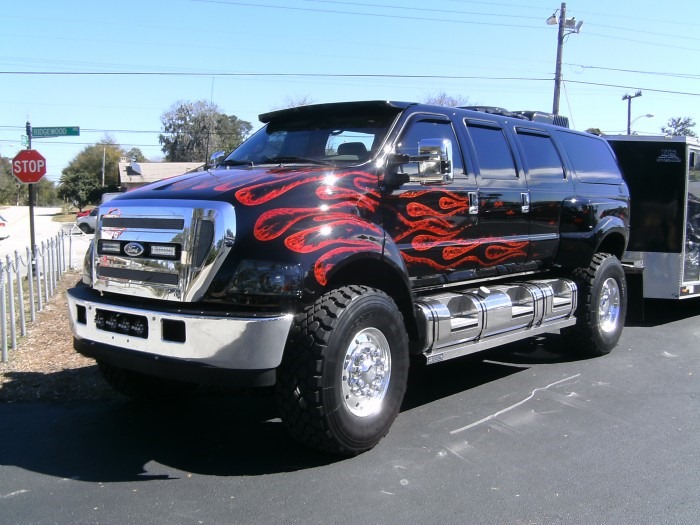
New, these monsters cost over $50K, and that wasn’t going to happen. Used was the only option, and we started to familiarize ourselves with the offerings from the big three – Ford, Chevy/GMC and Dodge. Looking at a price range only a little more than what we figured we could sell our Sequoia for and with some luxuries (that we consider essential) like leather and 4x4, that put us somewhere around a 2004-2007 model year. If we were going with a 3/4 ton, it seemed we’d likely end up with a diesel, known for their torque and engine breaking, and that meant we were comparing the Powerstroke, Duramax and Cummins engines. Ask anyone who knows their stuff which diesel engine you definitely do not want to pick in those years and they’ll tell ya… Yup, that’s right, we picked that one, the 6.0L Powerstroke. Lemme ‘splain…

mini-0896e

Soon after it was introduced in 2003 to improve emissions over the widely revered 7.3L Powerstroke, 6.0L owners started reporting problems that service centers were ill-prepared to deal with, eventually leading to hundreds of buybacks and lawsuits. Sand left behind from the process of casting the engine was clogging the tight passageways of the oil cooler. Coolant could no longer flow to the Exhaust Gas Recirculation coolers (EGR’s) which had been added to send uncombusted vapor back into the engine to improve emissions. Excessive heat was leading to EGR failures which leaked coolant and caused blown head gaskets. To make matters worse, low voltage in the Fuel Injector Control Modules (FICM’s) were causing injector failures and aftermarket performance chips which could unlock up to a hundred more horsepower were leading to “over-boost conditions” the engine couldn’t handle. A bit of a sh!tsh@w, huh? You wanna go out and buy one right away don’t you? 

In fact, I had been scared away from this engine numerous times during our decision process but kept coming back to the fact that the ‘03-‘07 Ford F250 was really the only crew cab 3/4 ton in that price range with a good sized back seat and a decent looking interior. And when they ran, they ran great. In addition, these trucks are priced to reflect the bad reputation but can be “bullet-proofed” for less than this discount by addressing the well-known problems. North of $35K, we might have been able to find an ‘08 with the improved 6.4L, a reasonable number of miles and the features we wanted, but those seemed to have their own problems. Okay, the newer diesel engines also require ultra-low sulfur diesel, available from every diesel pump in the US but not on the trips to Baja with a truck camper I have somewhere in the back of my mind. Finally, and this was a bit of a big one for us while getting used to idea of driving a big truck around, the 6.0L is said to run perfectly on 100% biodiesel. While biodiesel has its issues – enough for their own blog post – it’s readily available in our area and something we’re interested in investigating.

And then the perfect truck showed up on one of the several Craigslist and dealer search windows I had open on the iPad. And it was just down the freeway about 30 minutes. And two guys were coming to look at it that evening (okay, that *might* have been a sales ploy to get me in there). And the dealership had a no strings attached 3 day no cost return policy. Sitting there in the immaculate tan leather drivers seat, scanning the unblemished head liner (which we’d been told is a great indicator of how a used vehicle has been treated) and hearing stories about how the older gentleman had come in to trade “his baby” for a small luxury SUV for his wife (okay, again, that could have been good salesmanship), I tried as hard as I could to find something wrong with it. A test drive sealed the deal. We’d driven several of these at this point and this was by far the tightest, best feeling, best sounding one yet. We signed the papers, opened the rear door for Gorilla to make the epic leap from the parking lot pavement up into her cavernous new back seat and drove our new 2006 F250 Lariat Crew Cab Shortbed Diesel home.

The next day, we hitched it up to the new trailer for a test tow. With Wynne’s seat securely mounted rear facing in the center position of the back bench, she could look directly out the back window and over the empty bed with absolutely no obstructions. “Ah! Home!” she said with an inflection of surprise when she saw the front of the trailer so close behind us.

truck and trailer-001

Of course, she could have been looking at something else ‘cause when we started to pull forward with the trailer in tow, she threw up her hands, palms extended towards the back window in the universal sign for stop, and yelled “No! STAY!” at the tailgater as our new combo turned out of the driveway for the first time.