Saturday, December 31, 2011

All I want for Christmas…

The holidays came whether we wanted them to or not. In fact, our real present – our first child, a baby girl - wasn’t scheduled to arrive until after New Years, so for us, December was pretty much just a countdown of the last 4 weeks of the past 9 months. We heard a lot of “better enjoy it while you can” and “your whole life is gonna change” during this time, but the reality was, we knew all that and had returned home from our 5 month honeymoon in Mexico and Central America ready to have a child and build a natural and healthy environment to raise her in.

IMG_1414

We were in Chiapas in Southern Mexico last February when our good friends Richard and Alix had their son. We returned to San Francisco from Panama just in time for the arrival of Jim and Laura’s first child in April. And since then, we’ve been involved in more conversations about seedy mustard diapers and mastitis than most soon-to-be parents. Still, we felt it would be a good idea to take a newborn care class. After 8 hours in a room with 50 other couples and a labor and delivery nurse, we left with some solid real world tips on how to be the parents we wanted to be.

IMG_1426

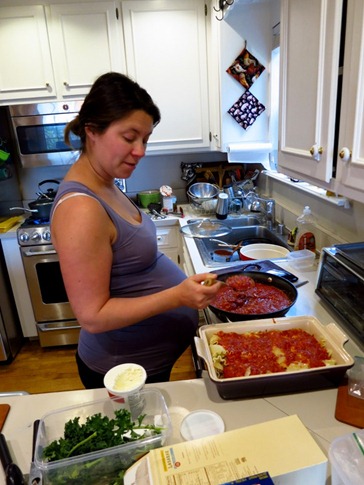
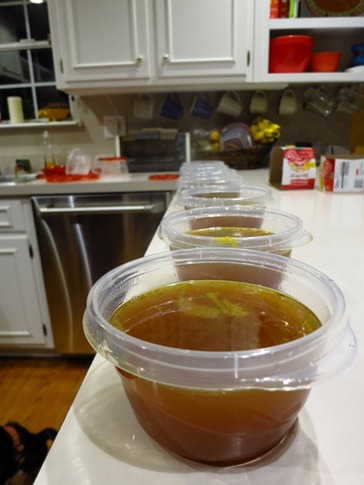
Back home, in addition to taking advantage of our ability to sleep in and to watch movie after uninterrupted movie on the couch, we also channeled our energies into stocking our freezer with easy meals for the first weeks with a new baby. The turkey carcasses from our Thanksgiving party - one laced with tequila and hot sauce before being fried and one rubbed with salt and rosemary and roasted - were used to make stock; lasagnas were layered with kale from our winter garden and grass fed beef from a local farm and slid into the oven; and Ann and I took turns filling our largest pot with soups that would be doled out into two-serving containers and stacked up in the freezer for quick access.

IMG_0383

IMG_0386

IMG_0465

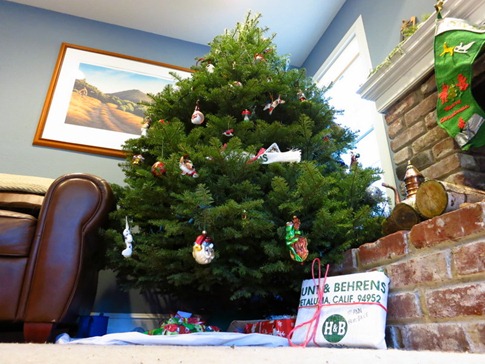
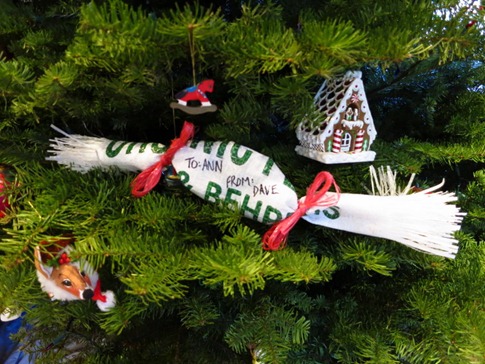
While a bit preoccupied, we still went through the motions of Christmas, getting a tree from the same country farm where my family has been buying them for years. Of course, in previous years, it took us about an hour to get there; Now, we live two miles away. I warned Ann that once we have our own little family, I might just make us all walk there pulling a wagon and some twine to bring the tree home. In the meantime, I scratched my “homesteady itch” by wrapping all our presents in leftover feed sacks that had been filled with organic swine feed. Note the proudly displayed logo of the nearly 100-year-old local grain mill and feed supplier. Sorry about the fine corn dust on all your presents everyone.
IMG_0448

IMG_0449

An ornament from a friend we met in town, also pregnant, set the mood for the year.

IMG_1475

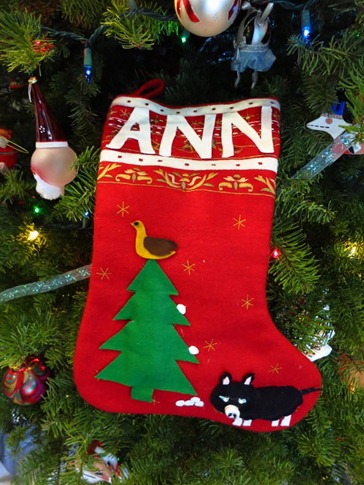
When my mom recently moved from the house I grew up in, my brothers and I chided her for packing box after box marked “Craft Supplies.” But when I realized that Ann didn’t have a Christmas stocking, I was glad she knew exactly which of those boxes contained reams of multi-colored felt and her trusty glue gun. I drove down to her new house one afternoon and put together a stocking I thought would represent our new lifestyle.
IMG_0454

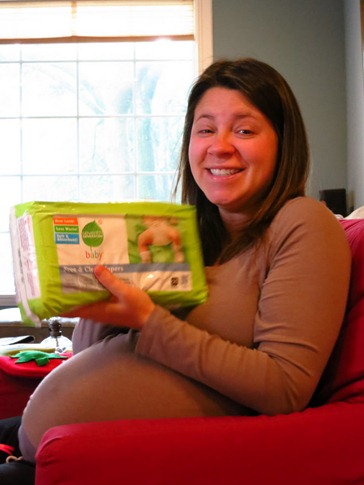
Even the Christmas gifts seemed to have a bit of a theme. Hey at least I didn’t give her a vacuum, and don’t worry, there was also a warm thing and a sparkly thing.
IMG_0451

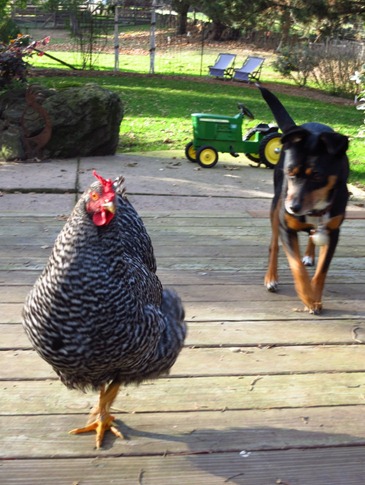
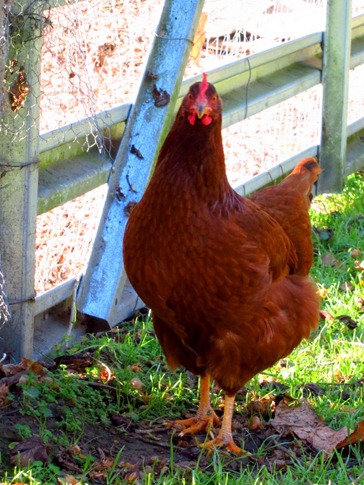
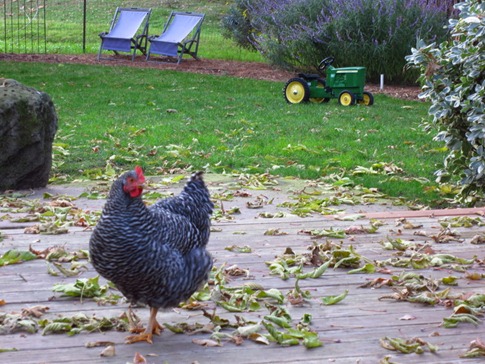
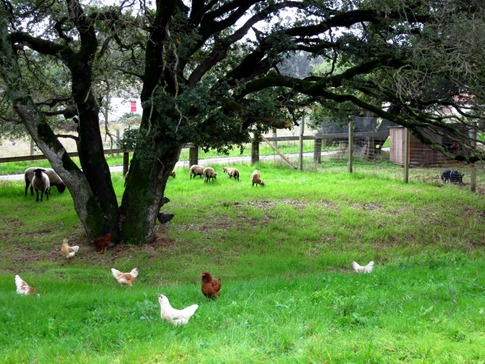
With family in the mountains until New Years and friends occupied with their own holidays, we were left on our own to countdown the days. Fortunately, the chickens decided to keep us company, following Gorilla through a low point under the fence and finding their way into the shade garden and to the deck outside our sliding glass door.

IMG_0391

IMG_0676

IMG_0670

IMG_0671

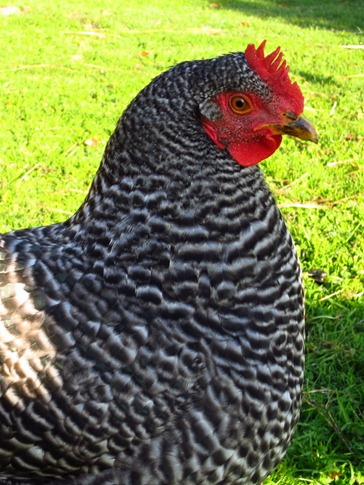
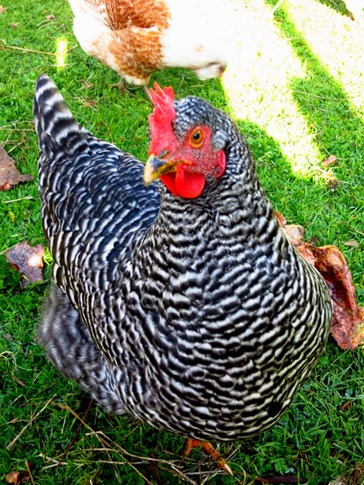
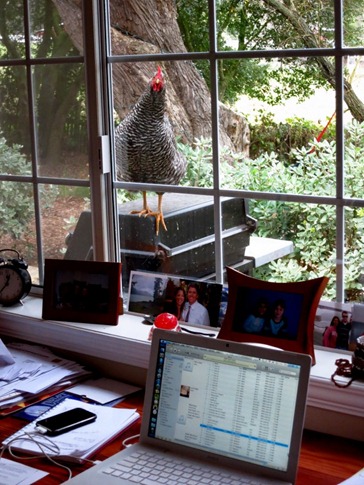
This Barred Rock was one of the second batch of chickens we got from the feed store at about 3 weeks old. By now, she’s far outgrown the older chickens as well as the other Barred Rock. We call her “Mongo.” These days, she’s frequently seen peering in through the sliding glass door into the dining room, and if she happens to find it open, she’ll happily walk right in. It’s strange to be doing dishes in the kitchen and suddenly hear a casual, “bok bok, bok bok” at your feet. If she can’t find her way in, she’s content to hop up on the BBQ for better view of the action inside.
IMG_0460

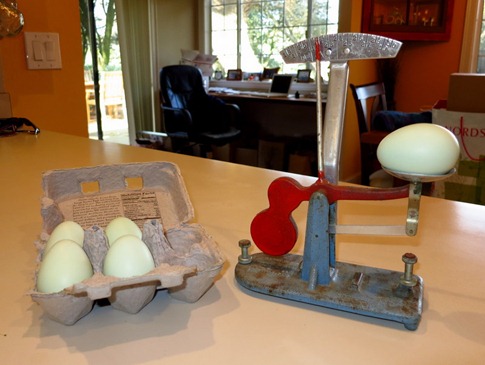
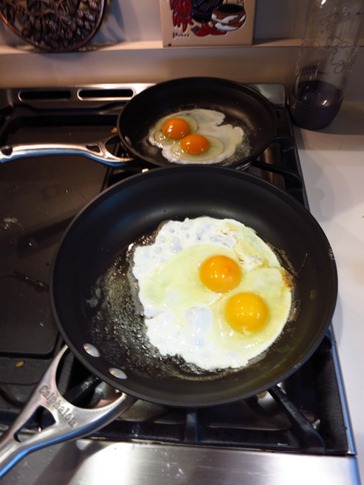
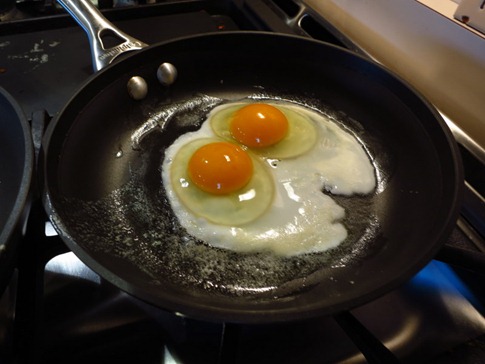
With eggs appearing in the nesting boxes everyday at this point, we decided to really compare these minutes-old farm fresh eggs to their supermarket competition. Okay, we were just trying to stay busy. It was also an excuse to use the antique egg scale Ann got me for Christmas. Though I should be able to deduce the units indicated by the dial with numbers ranging from 18 to 30 – if it was grams, it would go from 50 to 70 or so and if it was ounces, more like 1.5 to 2 -for now, I was content with the scratched markings that said “small,” “medium” and “large.” Our girls are producing squarely in the “medium” range.
IMG_0453

The vibrant orange color of the yokes and cohesive whites in the fresh eggs were easy to differentiate.
IMG_0392

IMG_0395

And in other distractions, we’ve been going out to check on the animals regularly as the weather reports have called for frequent frosts. When I went out one morning, the ice-sheathed grass in the pasture crunching underneath my muck boots, the large Suffolk female sheep approached me, sniffing my hands for the corn, oats and barley mix we let our friends’ kids feed them. I looked her over and searched her eyes for signs of the trauma of being left out in the cold all night. She seemed calm and her fleece, now thickening nicely 6 months after shearing, looked a little wet, but when I reached out to touch her, was warm and dry beneath the surface. For a second, I actually had the thought, “They should make jackets out of this stuff.”

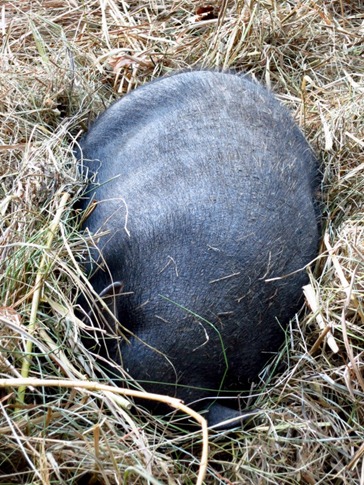
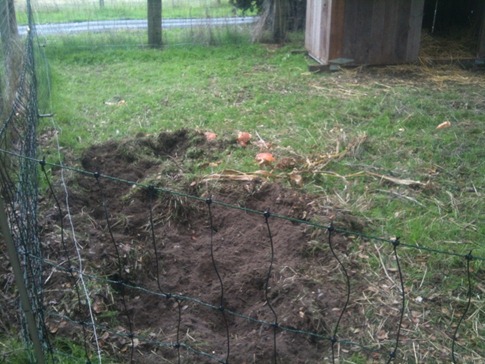
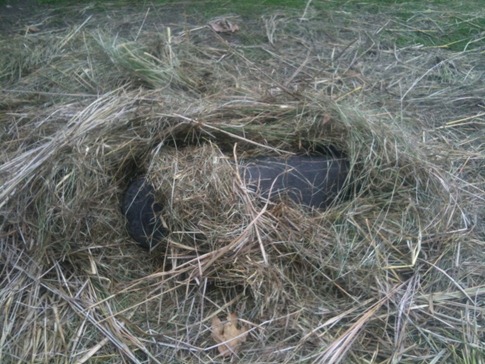
Before I could make an equally oblivious observation about the down-covered chickens, I started to look around for Petunia. Just then, I heard a grunt, and the grass at my feet began to stir. For the past few weeks, Pedro had been cutting back the tall decorative grasses in the sun garden and throwing the spent blades over the fence. Though she had the option of curling up in the sheep shed, Petunia had taken to burrowing deep into the pile of grass, completely covering herself.

IMG_1468

IMG_1484

IMG_0490

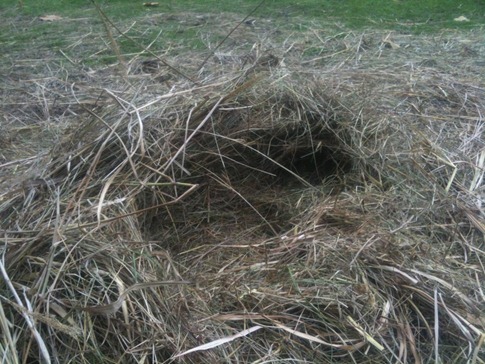
The Petunia-shaped hole left when she emerges each morning.
IMG_1482

One afternoon I was out in the pasture and witnessed her intricate and systematic process for assembling her shelter. Watch below…
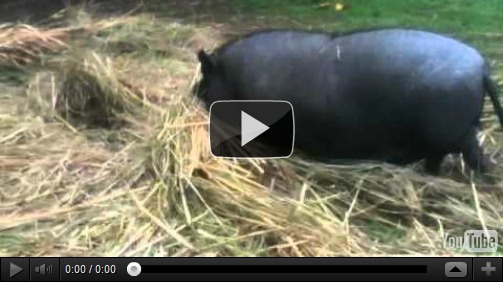
With all this anticipation of the baby and focus on the other animals, I’m starting to think Gorilla might  be a little starved for our attention.
IMG_0678

Tuesday, December 20, 2011

Sea legs and bacon and eggs

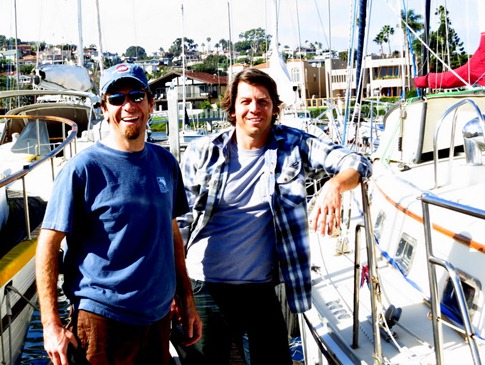
I didn’t mention in the last post that I got a chance to do a fun trip in November, possibly a last adventure for a little while until we get resettled post-baby. Over the Summer, a friend (one Ann and I had visited near Sayulita on our drive down the coast of Mexico about a year before) needed to move his 40’ sailboat from Puerto Vallarta up to San Francisco so it could be sold and was soliciting willing crew members. He had all the sailing knowledge and experience. He just needed responsible eyes to keep watch during what can be a grueling upwind voyage that those in-the-know call “The Baja Bash.”

IMG_0020

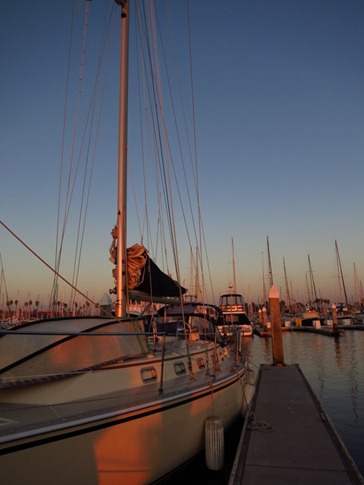
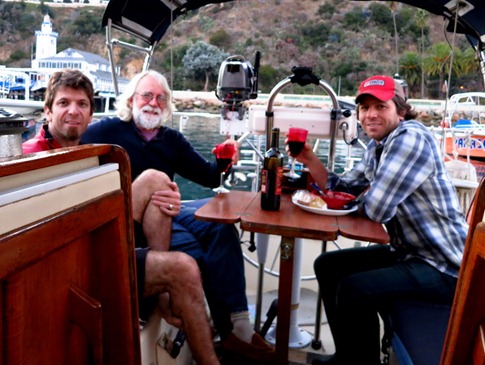
When my brother Mike somehow managed to get the time off and volunteered, I jumped on as well. We flew down on a Friday afternoon to meet our friend Michael in San Diego for the final leg of the trip up to San Francisco. Just as the sun was setting, the our crew of three slipped past the submarine base, out of San Diego Harbor and took a right. Unfortunately for Michael plans, weather conditions were not conducive to us braving the notoriously strong winds and currents around Pt. Conception just north of Santa Barbara anytime in the next three days, the amount of time we each had taken off, so for the time being, we targeted the more reasonable (and exotic sounding to me!) destination of Catalina.

IMG_0225

IMG_0230

Using the GPS on the boat was a little different than using one to navigating the tangled city streets and barren dirt roads of Mexico and Central America in our truck. Though there are some channels and obstacles to be aware of (more on this in a sec), you can basically set an end point and speed into the autopilot and kick your feet up. Of course, this system promptly lost power in the first hour, leaving us to consider how seafaring vessels of yore might have plotted their courses. For a second at least until Mike and I opted to view our position through Google Earth on his iPad while Michael performed the kind of underway MacGyverism that is required by sailors.

IMG_0092

Having first been inspired to set out on a grand trip after reading Bumfuzzle, the blog of a Midwestern couple who bought a catamaran and sailed around the world with no experience, I was quite familiar with this type of repair as performed by Bum husband Pat Schulte. Note, that the Schulte’s later drove the Pan American Highway and all around Europe in a 1950’s VW van, and as I write this are setting off from Mexico in a monohull sailboat with two kids under two years old. The blog and their book are addictive reads.

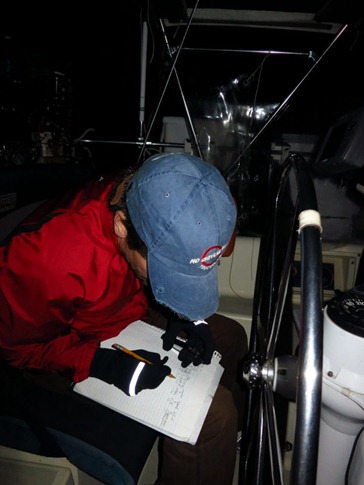
Captain Michael quickly assigned two hour watch shifts and briefed us on using the radar before going below deck to start cooking up the last of the Dorado (called Mahi Mahi in Hawaii) that they’d caught on the southern leg of the trip. By my second shift (2 to 4 am), I felt comfortable enough to scan the horizon for lights and then settle in to read my Kindle by headlamp for 5 minutes before looking up for another scan. At our 6 knot speed, I figured we weren’t exactly going to run anything over. But about halfway through my watch, I saw a huge amount of light pollution coming over the horizon and weirder still, it was coming from the left side of the bow. Lights of that scale could only be coming from a city or something – maybe Long Beach - but heading north as we were, they should have been on our right. I checked the radar and saw a huge blip to the left of the bow about 12 nautical miles out. Oh well, at our speed, it would take us two hours to get to it, and by that time, it would be the next watch’s problem. I briefed Mike when he relived me and stumbled nearly comatose down the hatchway to my bunk. The next morning, I awoke to hear that we’d passed within 3 miles of an aircraft carrier on our left side!

IMG_0188

IMG_0109

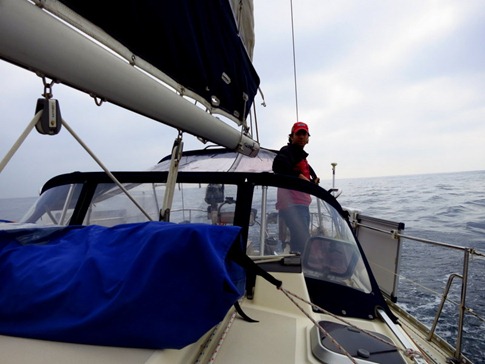
For rookie sailors like Mike and me, the trip couldn’t have been much better. Instead of the planned 72 hour upwind bash, we made a 9 hour passage to Catalina where we spent a lazy day exploring and had a great dinner bobbing in the anchorage. The next morning, we spent a beautiful 12 hours motoring north to Ventura where Michael had resourcefully arranged for a yacht broker to list and show the boat, and we could rent a car to at least arrive home over the Golden Gate Bridge if not under it as we had planned.

IMG_0139

IMG_0141

IMG_0232

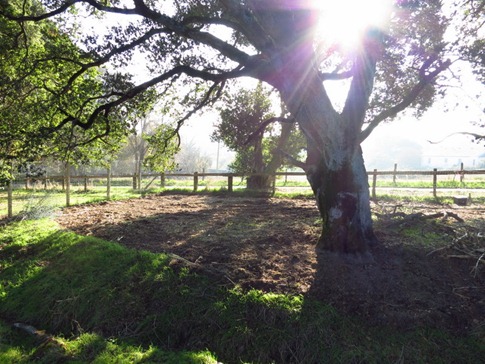
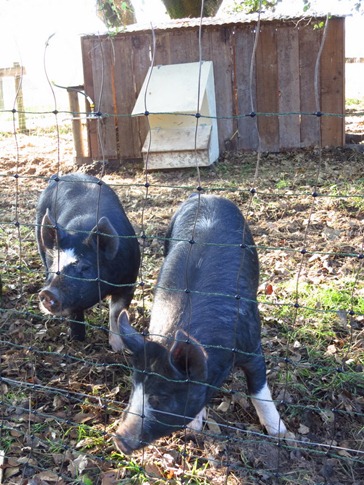
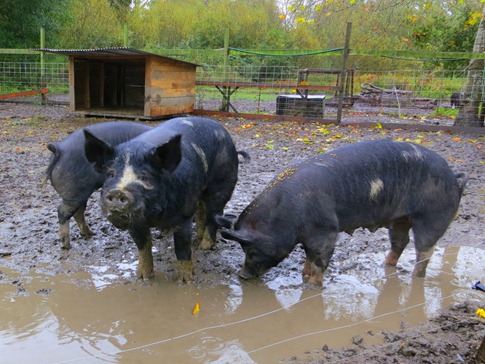
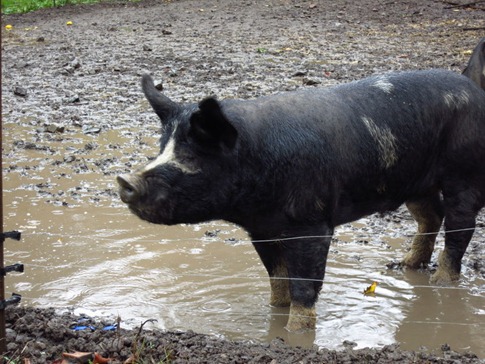
Since the last post on the farm, the new pigs have been busy rooting up the soft earth in their assigned 40’x40’ plot. They drop their snouts to the ground, and aligning their body weight and strong legs behind them, dive into the soil like a submarine sinking below the surface. Sometimes they settle into their new divot for a nap in the sun and other times, they move on to the new row to plow.

IMG_1367

By the end of four weeks, they had turned over every inch in their enclosure. I set up a new paddock for them on the next fresh plot of ground over, both so they’d have some more forage and to minimize their impact on the land. They wasted no time starting to sculpt it to meet their tilled sensibilities. I’d considered setting aside a small field to plant some corn and pumpkins for next fall, and I immediately knew that setting up paddock for them there would condition the soil perfectly before planting. Joel Salatin calls the process “pigeration.”

Remember our “unboxing video” and the pigs running around in the green grass from the last post? Here’s the same paddock after four weeks. Note the neatly edged grass where the fence ended.

IMG_0433

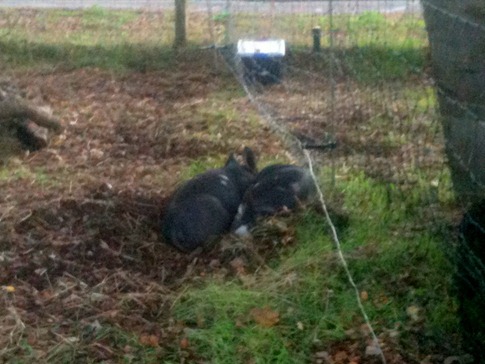
I wouldn’t say they were “destructive,” just thorough. They concentrated all their poo in one spot, usually right where I would absentmindedly step only to suddenly feel like I was walking on Jello and necessitating a thorough cleaning with the power nozzle on the hose by the barn, and well away from there, slept together head-to-tail in a Ying Yang-shaped depression they’d rooted out for that purpose.

IMG_1433

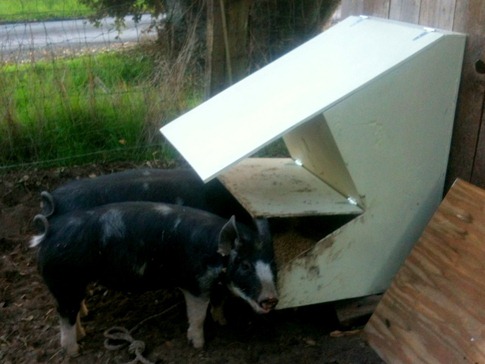
The Storey's Guide to Raising Pigs had a chart estimating how many pounds of feed the pigs would eat, roughly 4.5% of their body weight at a given time. The easiest way for me to think about it was that our two pigs would eat about 10% of what either one weighs. At 75 pounds each, together they’d eat 7.5 pounds meaning that a 50 lb sack of feed would last just under a week. After a few weeks of walking out with a bucket of feed every morning, sometimes tossing over an extra treat like the corn stalks from the Fall garden or the decommissioned jackolanterns, I decided to cobble a gravity feeder together based on some pictures and drawings I found online. It took the pigs about two seconds to figure out how to lift the lower flap with their noses and stick their heads into the trough which was constantly refilled by the two bags of feed poured into the top. See ya in two weeks, boys. Storey’s guide also points out that while limiting their food intake to 90% of their appetite might seem to cut down on feed costs, the extra time they would have to spend growing to market weight would likely negate the benefit, so we opted for the convenience of the self-feeding approach.

IMG_1422

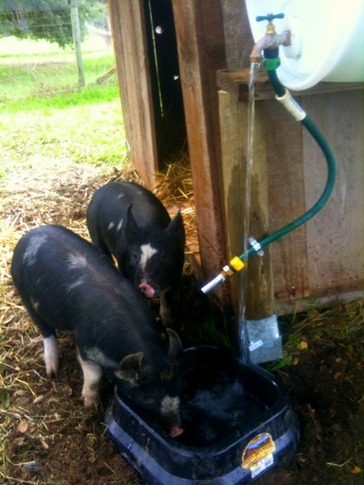
Also note below to the left of the feeder a much improved fitting for two water nipples that I pieced together with galvanized pipe. I spaced them far enough apart that they could both get water at the same time and securely braced it to the (apparently-useless-since-they-sleep-in-a-hole) shelter. I now link three long hoses I have on rolling carts to reach the 55 gallon barrel from the spigot in the garden. That seems to last them about two weeks. 

IMG_0437

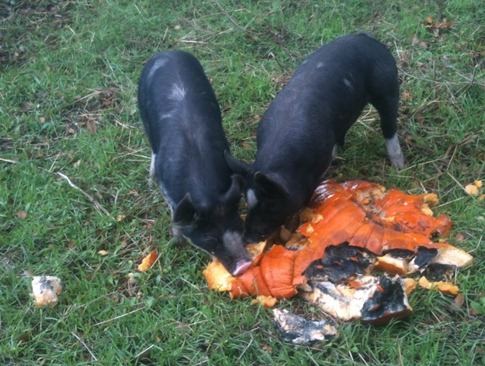
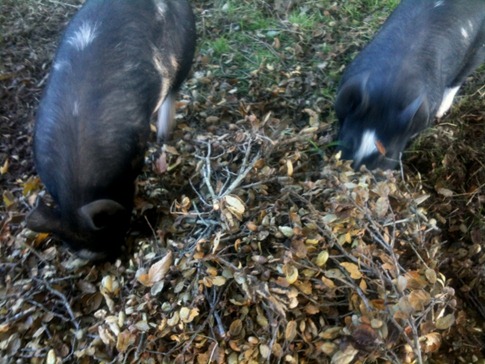
Pumpkins and a treat of a branch full of acorns which they seemed to scan over like vacuums extracting each nut from the mess of leaves.

IMG_1362

IMG_1440

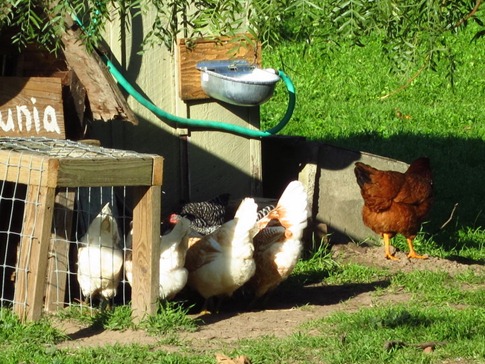
Meanwhile, we’ve been trying to figure out just when our chickens would start laying eggs. Though the prevailing wisdom seems to be that chickens will start laying between four and six months of age, our nine birds span from five to eight months and, except for a momentary confusion each morning when we open the egg door and see the golf ball we placed in the nesting box as “encouragement,” have given us nothing. Our friend, Finn, a committed (as in “should be”) poultr-i-phile, suggested we lock them in the coop for a few days to eliminate the possibility they were laying somewhere else and we just couldn’t find the eggs.

The first morning I walked out to check on the pigs, I couldn’t even look at the chickens. I could tell they’d all heard me coming and were lined up at the door for their morning release and cracked-corn sprinkle, but it never came. I really felt terrible and had to remind myself that most other chickens don’t get to free-range on four acres and would be quite happy with the run that ours have. Still, each confused cluck sounded like a “Cluck you” to me. Somehow, I managed to get through four days of guilt and when no eggs were found, figured the short days of winter had postponed their light-stimulated maturity, and we’d have to wait for Spring.

Needless to say, they were excited to go back out on their first day of freedom and resumed their rounds, pecking and scratching the far corners of the fence line and roosting in a fallen Cypress. But around 4 pm, I started hearing a lot of squawks from the pasture. I looked out to see everyone milling around the coop as they might on any afternoon. Half hour later, more squawks and two chickens on top of the corrugated metal roof of the coop, somewhere I’d never seen them before. Then I noticed one on the pasture gate and one on the fence. They seemed to be in a panic, trying to find a position on the highest things they could reach in the pasture. They were frantic! When I walked out for a closer look, I saw that the small chicken-size coop door I use to let them out had blown closed. Despite having been locked up for four days (and calling me all those terrible names in their little chicken heads), the prospect of not getting back into the coop to be locked up for the night was terrifying to them!

When you have a fight with your wife, you get her flowers. When you want to show your chickens you still care, you build them this (based on the excellent design and article here)…

The girls really seemed to appreciate being able to saunter out at the crack of dawn and are always sure to be inside at least a half hour before sunset (although the timer on the door gives them an extra half an hour). An added bonus is that eat less feed and poo less in the coop. We’ll admit to sitting on the couch and counting all 9 chickens on their roosts via the wireless web cam I put out there. Great little devices for $89 including night vision and the ability to rotate and tilt so we can make sure the door closed correctly. I would strongly recommend the Foscam over the imposters and recommend ordering direct to make sure you get the latest version. And yes, I have one installed as a baby monitor as well using a cool app for the iPhone.

IMG_0426

IMG_0424

IMG_0431 IMG_0417

IMG_0432

IMG_0421

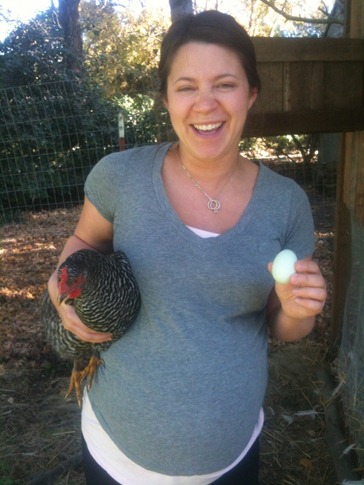
And later that week, on the official shortest day of the year, we hit the jackpot. Well, one small blue egg, but we were pretty excited!

IMG_1449

(yes, chicken dorks, we do know that the blue egg was laid by one of the Ameracaunas not the Barred Rock Ann is holding in the picture above)

Saturday, December 3, 2011

Gettin' piggy with it…

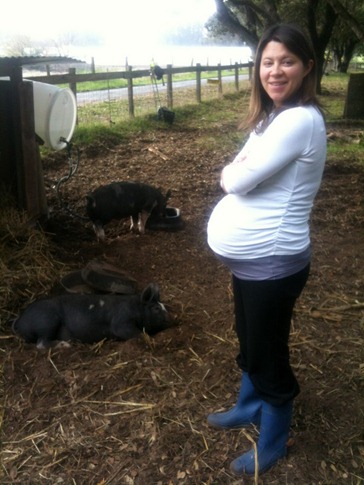
At about three months, I really started to see a lot of growth, particularly in the midsection but also the shoulders and definitely the rump. Of course, the insatiable appetite may have something to do with it; Pretty much constant eating mixed in with frequent naps and an occasional walk. Not a bad life from my perspective, but nonetheless, the moods were unpredictable, so I tried to just stay out of the way. It’s been great so far, and it’ll be all worth it in a couple more months. One thing’s for sure, I won’t miss the stink. Big piles of slippery poo everywhere. I pretty much have to wear muck boots everyday. Oh, did I mention that we got two pigs?

IMG_0243

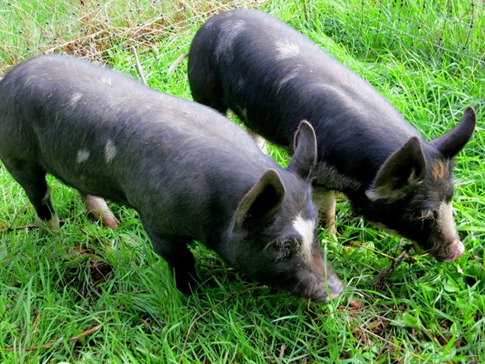
After researching online and reading Storey's Guide to Raising Pigs, we had decided on the heritage Berkshire breed because of its sought-after meat and ability to live outdoors on pasture. It’s weird to say that we actually had to choose  a pig that would be able live outdoors but the truth is, many of the breeds raised by factory farms have been selected for a pretty pink skin color prone to sunburn and are usually kept on cement floors where they can’t root at the ground.

We’d considered getting a breeding pair, a boar and a sow, having heard that the Berkshires still retain their mothering instinct, but when we arrived at the farm near Pt. Reyes and saw the 400lb big boy and his two lady friends (below), we thought that maybe starting off with a couple “feeders” was a better idea. Plus, now if we had second thoughts about “processing” our pigs at the 200 lb market weight, we’d just remember how big they’d get if we didn’t!

IMG_0250

IMG_0244

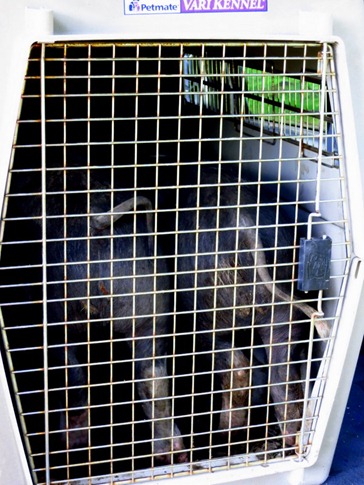
In addition to helping us find a breeder for the piglets, Craigslist had yielded an extra large dog crate – the San Anselmo couple we bought it from for $25 was amused to hear who the next occupant after their aging golden retriever would be – which was now in the back of the Xterra. After some herding, wrangling and dramatic last second dives, the guy got each piglet by the back legs and walked them to the car like a wheelbarrow before swinging them up into the crate. I’m sure a more delicate approach would have been much less effective and the pigs, now two in a dog crate, seemed to settle in quickly.

IMG_0252

IMG_0257

This was another one of those “What a difference a year makes” moments as we retraced the winding Point Reyes-Petaluma road through the gorgeous rolling green hills surround the Nicasio Reservoir thinking, “We just bought two pigs. They’re in the back seat of the car right now.”

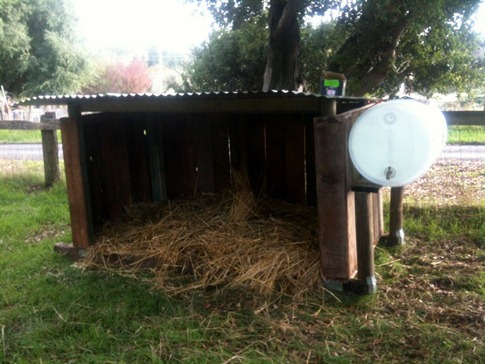
In the weeks prior, I’d built a small shelter using the redwood sheeting from the mushroom boxes we’d made into planting beds along with some galvanized metal roofing and mounted the whole thing on some 4x6” skids so it could be dragged behind the ATV. I’d also bought a couple rolls of electric mesh fencing and a fence energizer and set up a 40’ x 40’ enclosure under some oaks towards the back left corner of our property. The old car battery we’d replaced with the Optima in the Xterra provided the charge, and an extra strand of wire just about snout-level provided a little extra confidence that I wouldn’t be chasing pigs around the yard anytime soon. 

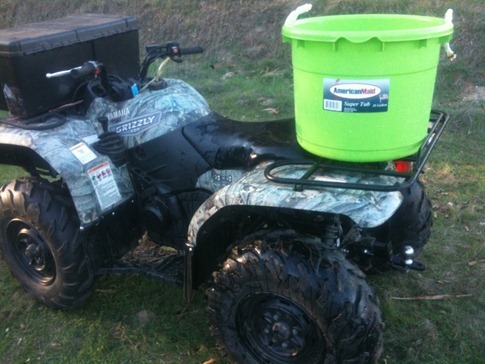
All that was left was to devise some kind of system to get them water, since we didn’t have a spigot anywhere close by. My first solution involved a plastic tub on the back of the ATV. My half-assed approach left my ass half-wet as half of the water sloshed out on the way there and the other half spilled as I clumsily dragged it off the ATV rack. Not a long term solution.
IMG_1316

We found some 55 gallon plastic barrels on (you guessed it) Craigslist that would make transport a little easier but still, I’d learned during my post-college exploits as a fledging rock climber that a gallon of water weighs just over 8 pounds - 55 gallons would equal over 450 - way too much for *even me* to lift. I figured I could strap a barrel to the back rack of the ATV, fill it there and then roll it onto a shelf at the same height on the shelter I’d built for the pigs. No lifting involved and the potential energy of the elevated barrel would provide a gravity feeding effect. Good plan, right? So I measured the height of the back rack of the ATV, built a shelf at the same height on the shelter, filled the barrel and drove it out there.

Now, you armchair farmers (farmchair quarterbacks?), may already be onto my one fundamental miscalculation, but it’s worth mentioning one more; This approach put significantly more weight on the rear rack of the ATV than it was meant to take. I wasn’t so much worried about it breaking, or even the extreme compression of the shocks (hint hint on the bigger problem I was about to have), but I was basically riding in a slow motion wheelie with barely enough weight on the front wheels for them to steer. While I made it out to the pig paddock without flipping – a serious risk I don’t intend to take again – when I backed the barrel up to the custom-height shelf on the shelter, it was about a foot too high! Oh yeah, I’d measured the height of the ATV rack *before* I’d added the 450 pounds of water and compressed the shocks! After about 13 minutes of standing there scratching my head and another 2 waiting for Yoda to emerge from behind an oak to teach me how to use The Force, I was finally able to hoist the load up the necessary amount with some cam straps.

IMG_1335

Which brings us back to an XL dog crate in the back of an SUV. This is a different kind of “unboxing video.”

IMG_0266

IMG_0272

IMG_1369

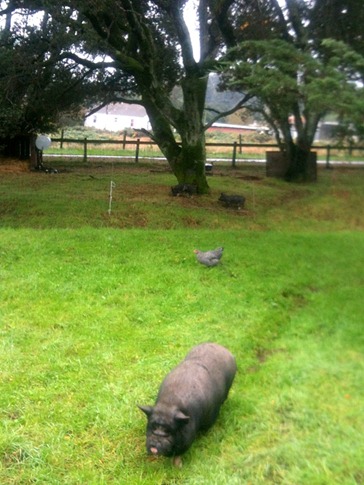
The question everyone asks is “What does Petunia think of the other pigs?” Well, she’s come over to check them out a few times…

IMG_1427

…but then pretty much heads the opposite direction. She doesn’t really seem to recognize them as anything familiar. Okay, whatever, I’m gonna go lie in the sun.
IMG_1372

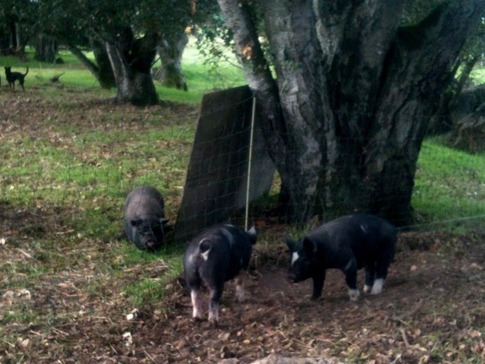
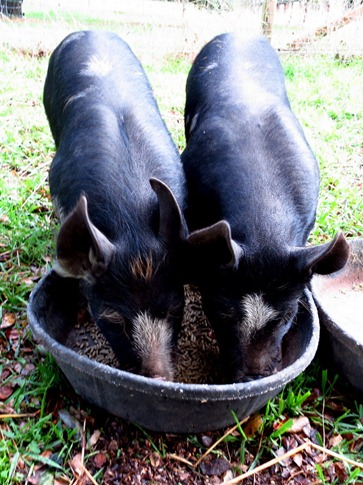
The new little piggies seem pretty happy in their new environment. They snack on grass, root in the soft dirt, lay in the sun and then settle in head-to-tail in a little depression they’ve carved out to sleep for the night, never mind the cozy shelter filled with hay I built for them.

IMG_1378

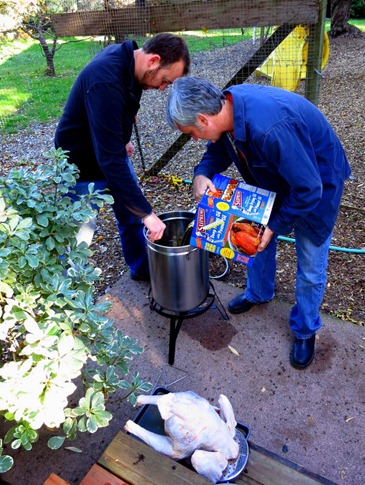
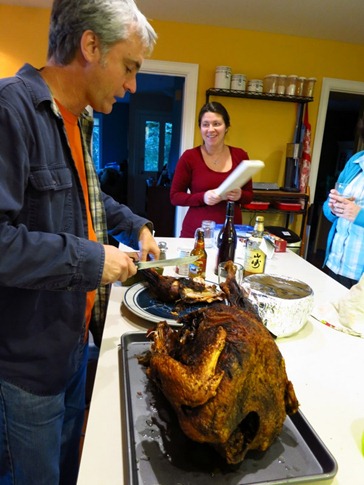
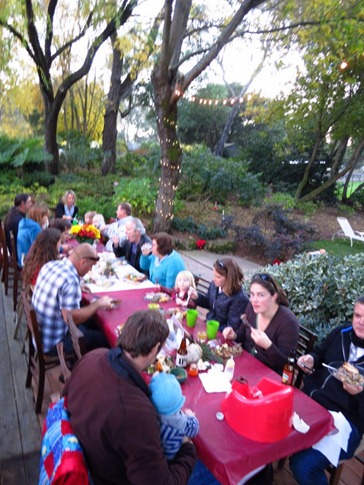
We started a tradition about 4 years ago that we call the “Friend’s Thanksgiving.” Usually the weekend after we all get together with our families to eat our aunts’ jello salad with mayonnaise or listen to our sister-in-laws caution us that the turkey might be too dry, Ann and I invite all our friends over to make their favorite dishes and fry a turkey (which BTW is only slightly less dangerous than flipping an ATV). This year was particularly fun because we got to show our “farmlet” off to the people who hadn’t yet made it up.

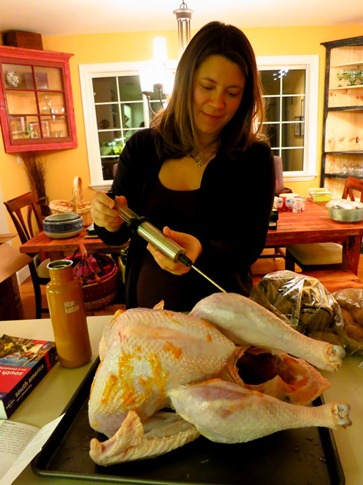
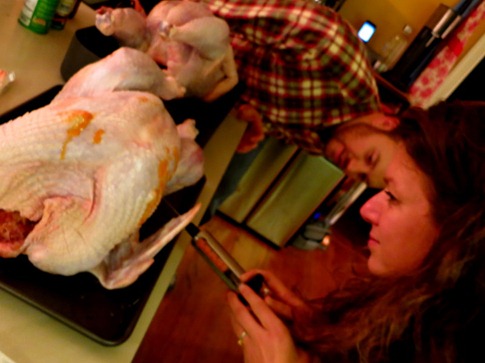
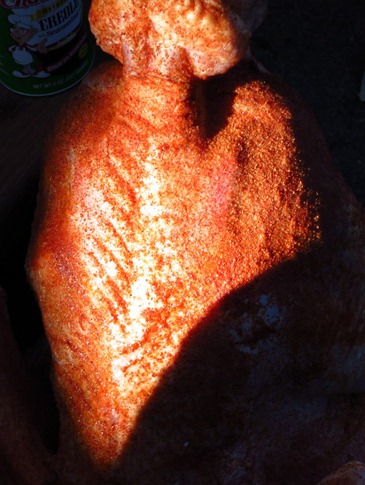
The night before the party was spent injecting the turkey, one of two pasture-raised birds we got from Tara Firma Farms just up the road from us, with an eye-watering mixture of onions, garlic, Louisiana hot sauce and Tequila.

IMG_0307

It’s fun to watch the skin bulge as you depress the plunger on the wide bore syringe and know how good all that’s gonna taste the next day.

IMG_0305

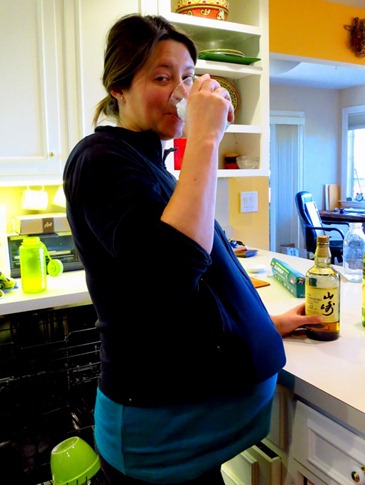
But even a pregnant lady needs to de-stress with a sip of Japanese Scotch (?!) once in a while.

IMG_0313

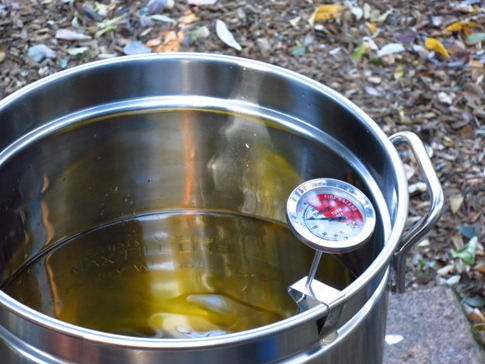
Everything came off perfectly, and we appreciated everyone making the hour or so trip up from San Francisco or the East Bay. As usual, Dan produced a perfect (and 100% explosion free) bird out of the peanut oil and even surprised us with our own fryer and pot as a wedding present. Ann’s oven-roasted turkey with rosemary from the bush outside our front door and salt rubbed under the skin was excellent as well.

IMG_0327

IMG_0328

IMG_0329

IMG_0333

IMG_0334

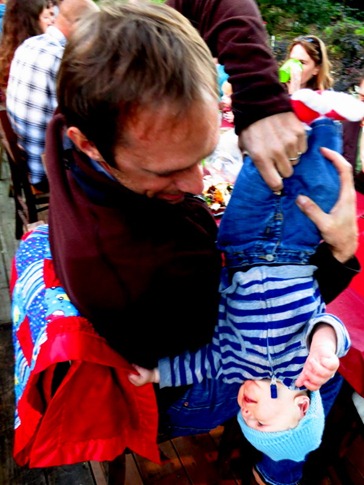
Several people brought loads of hand-me-down clothes and baby supplies for us. It’s an interesting phenomena that as we get older, the average age of our gatherings is rapidly descending.

IMG_0339

IMG_0320

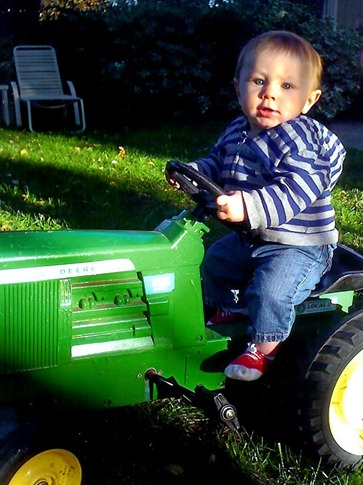
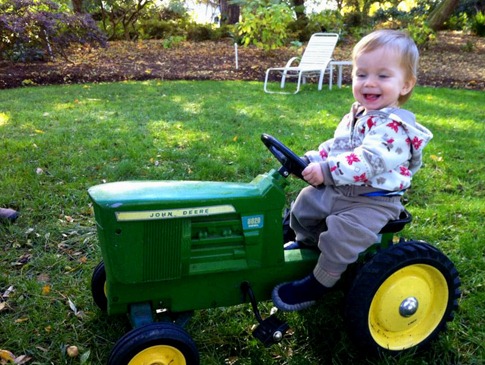
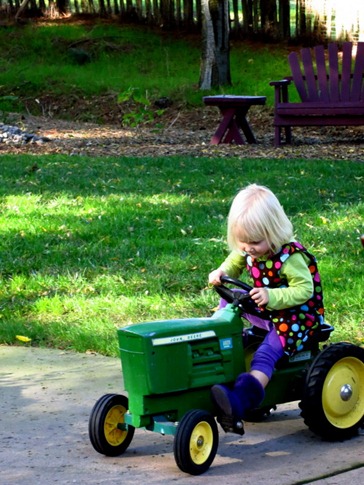
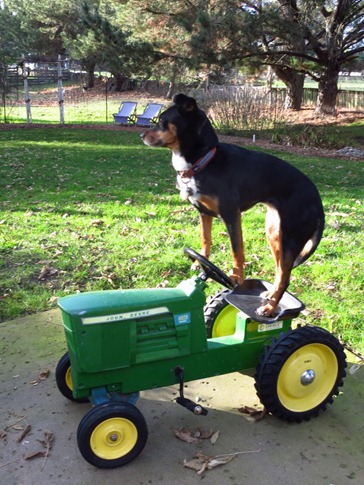
The mini John Deere tractor was a big hit. I’m thinking a collage of everyone’s kids riding it might be necessary, perhaps on a yearly basis until they graduate Med school.

Levi-on-the-tractor gus on the tractor

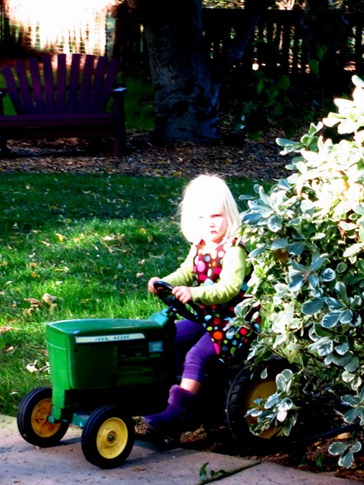
Although there was a minor incident when Lily couldn’t find first gear…

IMG_0322 IMG_0323

The day after the party, I was up by the back fence and saw two huge turkeys. While we get a few wild turkeys coming through every once in a while, these belong to the neighbor above us who’d actually texted me the other day saying they’d gone missing for a few days and could I keep an eye out. He lets them free range completely, roosting in the trees at night but returning in the morning for food and water.

IMG_1394

Having paid $7.00/lb for our pastured turkeys, a few times the cost of conventionally-raised, I couldn’t help but consider that right there was at least a couple hundred dollars worth of Thanksgiving dinner just walkin’ around. I’ve already been on the McMurray Hatchery web site and offered to get a couple extra for friends and family next year. 

Oh come on. That is some bucolic stuff right there… One big happy family.
IMG_0277