Wednesday, March 2, 2011

Honduras-Nicaragua Border

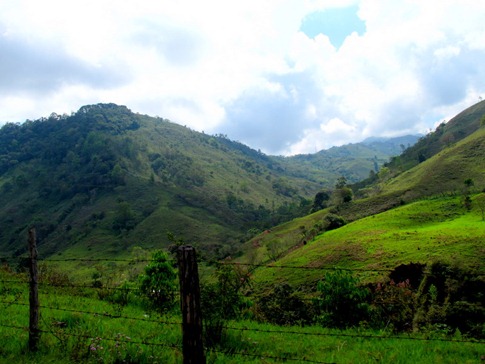
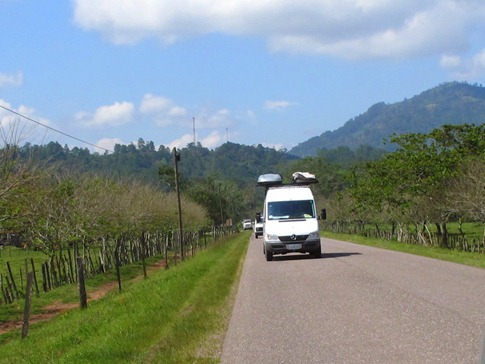
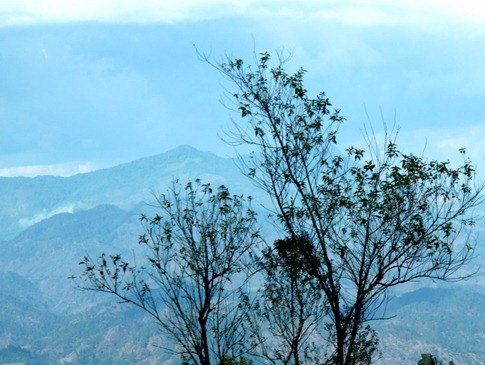
We’d only caught a glimpse of Lago de Yajoa from a wrong turn on during the drive in. Now, we were following a road along its beautiful east shore. A large lake with deep blue waters and steep mountainous banks, it looked like it would have been fun to spend some more time on it. But despite having enjoyed our time at the brewery and the waterfall, we were still on a mission to get through Honduras without incident.
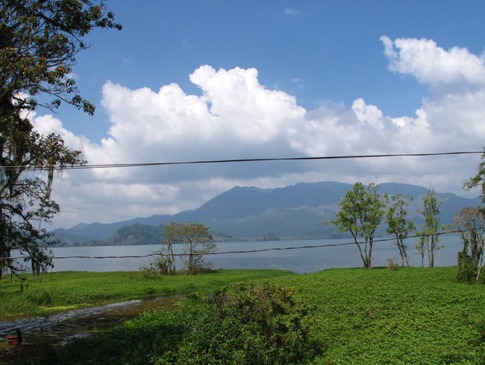
IMG_1871

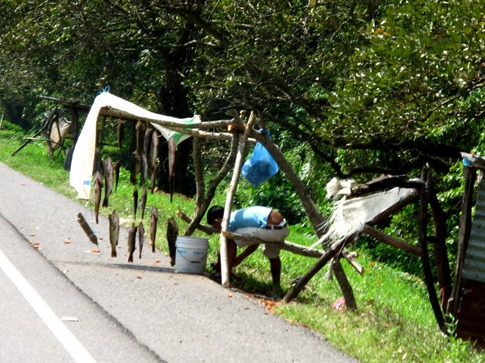
IMG_1865

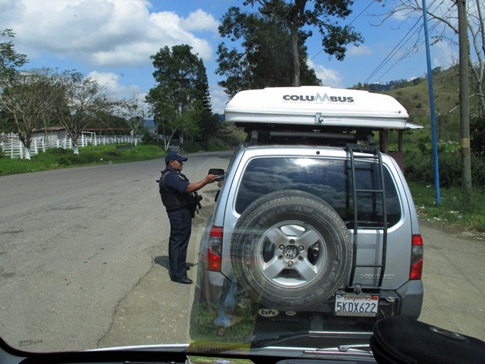
Ol’ Hondo gave it one last try at a final police checkpoint. Being the first in line, they always saw our foreign plates first and waved us over. By the time they noticed the two vans behind us, undoubtedly filled with unregistered dogs and freewheelin’ hippies, it was too late. This time it was “Triangulos?” I nodded and responded that I had them. “Triangulos,” he tried again, not wanting to believe that the gringo was actually prepared for his fabricated request. As I’ve mentioned before, this scam is renowned in the overlanding community, and whether a law actually exists or not, you’d be asking for it to travel through Honduras without two triangles and a fire extinguisher. He gestured for me to show them to him. Having forgotten that I’d planned to put them somewhere accessible, I started going about the process of unscrewing the rear cross bar of the roof rack to access the storage boxes under the roof tent. When he walked around back to check on my progress, I gave him a “Almost there! Just 5 or 10 more minutes!” smile. He just put up his hand for me to stop and waved us on.

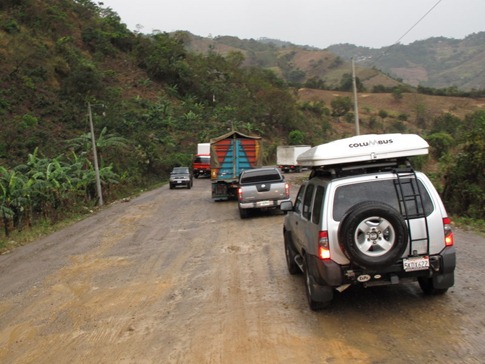
We got through the capital city of Tegucigalpa without problems from cops or road signs, though we were tempted to stop for Dunkin’ Donuts. Beyond were rolling hills sparsely covered with pine trees, giving the impression of a half-assed effort at reforestation after rampant logging that culminated in the 70’s and 80’s. Near the border, tobacco processing plants were just changing shifts, and a flow of uniformed workers were walking or riding their bikes out the front gates. Large wooden warehouses by the side of the road were probably used for storage or drying.

IMG_1872

The plan was to stop in the afternoon and hit the border first thing in the morning. In the town of El Paraiso, hotel options were slim, and we ended up at the only place in town with a gated lot. It had a nice interior courtyard with a bridge over a pond and maybe 20 rooms, though it was hard to know who exactly would ever stay there. The town itself had one main drag with mostly dirt side streets and not much going on. Chad liked to think he was the talk of the town, walking up to buy a rotisserie chicken flanked by two hot gringas, Ann and Stevie.

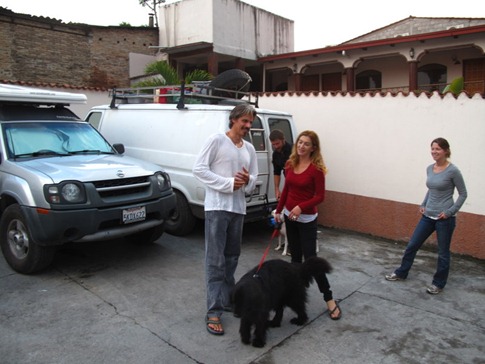
At a hotel, each couple in our caravan has its own approach to arrival. Honestly, Ann and I just want to grab a couple things from behind the seats, throw ‘em into our backpacks and lie down on the bed for 15 minutes. Tree and Stevie will usually pay for everything up front, then find an opportune time to surreptitiously walk in a side entrance with Kiki. The idea is that it’s a lot harder for the management to say no to a dog once they have your money; In the event that there’s a problem, usually a couple extra bucks smooths everything. Chad and Emily are sticking to a strict budget so will usually wait until we all get checked in before approaching the management with a proposition; Since their friends are staying there and paying full price, could they pay a few bucks and sleep in their van in the parking lot? It’s worked this way pretty much everywhere we’ve stayed as a group, and in the end, everyone’s happy.

That night, we drank beers and ate rotisserie chickens in the courtyard of the hotel. Just as we settled into our beds around “overlander’s midnight,” 9:00 pm, the disco next door started up. Bass was thumping and people were screaming for about half an hour before the power went out in the middle of that one catchy Black Eyed Peas song. Ironically, it was only just then that I had a feeling that tonight was, in fact, gonna be a good night (woo hooo!).

In the morning, Chad and I walked a few blocks to a coffee shop we’d seen the day before. As we approached the counter, the girl behind the register let out a sigh and said, “Aye, no tengo energia.” I know how you feel, I thought, I don’t have any energy either until I get my morning coffee. We very slowly realized she was telling us that the power was out, and there was no “energia” to run the coffee machines. Stupid gringos.

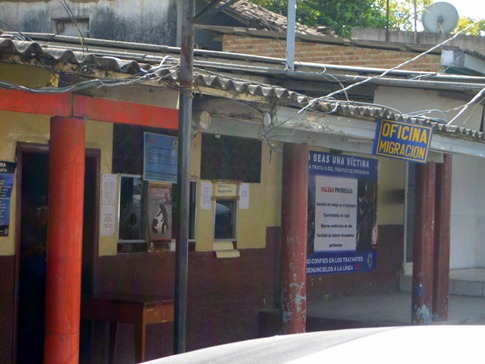
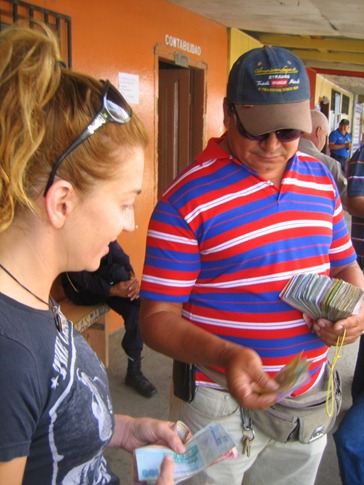
The smaller Las Manos crossing from Honduras into Nicaragua felt a bit like a western frontier town. Things were pretty easy on the Honduran side. We paid 60 Lempira ($3) each at the Migracion window to exit and a customs agent actually came to us to collect our vehicle permits. He processed them all together, walking to each truck to confirm VIN’s, and after changing some money, we were out of Honduras before I’d even finished my morning coffee. The agents in El Poy who had taken an hour for each truck should be taking notes from these guys.

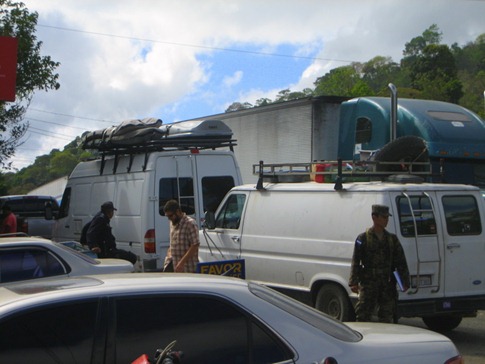
IMG_0215

IMG_0210

IMG_0217

IMG_0208

IMG_0219

IMG_0220

On the Nicaragua side, our group was quickly attached by a clean cut young guy wearing a polo shirt from an insurance company. After confirming that insurance was in fact required in Nicaragua, we each agreed to buy the $12 policy from him, and he walked us through the rest of the border process.

IMG_0224

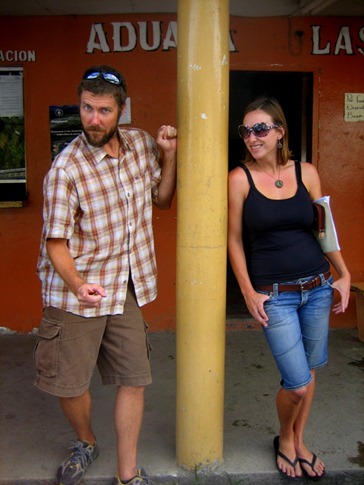
At the first window on the left after a checkpoint, two guys took our passports and filled out a small form with our information. Our friend the insurance agent suggested we might want to tip them. A little annoyed that we could have just filled out the forms ourselves but acknowledging that it was nice we didn’t have to, I gave each of them 10 Honduran Lempiras ($0.50), and they seemed happy with it. Our helper walked us down to immigration, greeted the agent behind the window with a friendly handshake and presented us. We paid 270 Nicaraguan Cordoba (like $12) per couple to enter but were given a $4 receipt. Not quite sure what happened there, but it was the same for everyone we saw after us. A guy came by asking for $1 per person for some kind of municipal tax which sounded familiar to us from one of the blogs we’d read. And it came with a receipt, so it felt legit (even if Chad’s face below doesn’t look like he agrees).
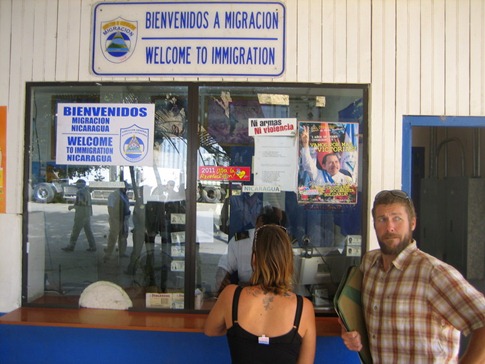
IMG_0223

Note the ExPo sticker…

IMG_0228

For the vehicle permits, we just hung around handing documents to our insurance guy when he asked for them. He then ran to grab an inspector to look at each truck. The inspector asked us to open our rear hatch including folding down the table and just said, “Ah, comida.” He looked inside the Sprinter to see Stevie splayed out on the bed, screening Kiki. Remember, best practice seems to be to try to get the dogs across under the radar before declaring them. Finally, he opened the back of Chad and Emily’s van to find Luna panting back at him from the top of the load which required them to go across the street to start another process of clearing the dog. After a few minutes, with a couple signatures, we paid our insurance agent $15 for the $12 policy and were clear to cross into Nicaragua.

Monday, February 28, 2011

Lago de Yojoa

The caravan set out for the final leg of our journey together from Copan Ruinas to Lago de Yajoa. From there, Tree and Stevie would turn north towards the Caribbean coast, the Bay Islands and Trujillo, Columbus’ first landing in Central America and a town that happens to bear Tree’s last name. Trivia fact: Honduras actually means “deep water.” Our plan was to continue across Honduras (the land part) with Chad and Emily who were anxious to get to Costa Rica.

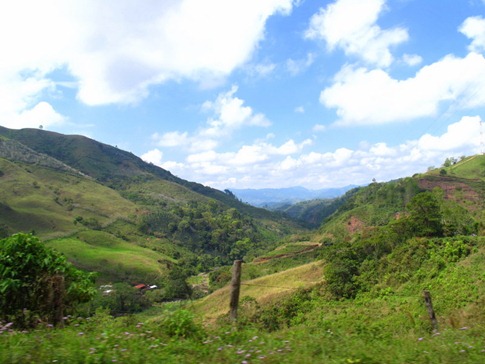
Though the cops and roads have not made Honduras the most welcoming thus far, it’s a beautiful country of rolling foothills with some world-class cultural sites. And any inconveniences we’ve had pale in comparison to the horror stories we’ve heard about the southern route on the Pan American Highway.

IMG_1821

IMG_1817

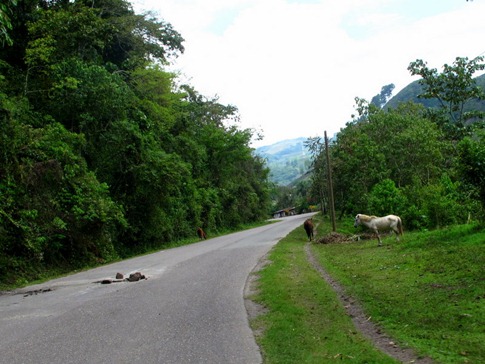
Honduran slalom. Thank God someone put rocks in the road so we wouldn’t hit that pothole. Watch out for the horses!

IMG_1811

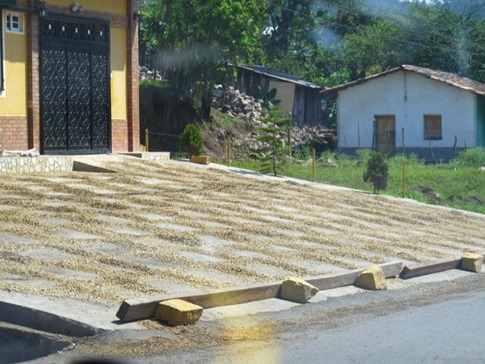
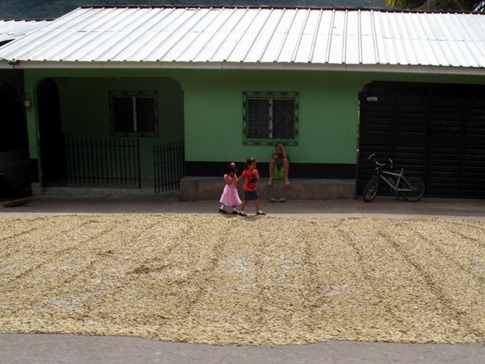
We drove north towards the second largest city in Honduras, San Pedro Sula, because… well, that’s where the main road goes, and based on the condition of the main road, side routes didn’t seem like the best idea. The streets in front of small houses were paved with drying coffee beans, turned every so often with a rake. I thought it was only a matter of time before we pulled off into one of these to ask directions and ruined everything. Although, it would have smelled delicious.

IMG_1802

IMG_1813

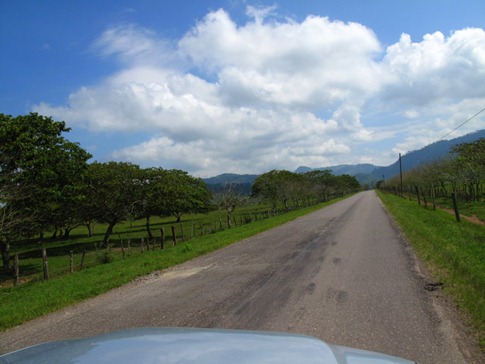
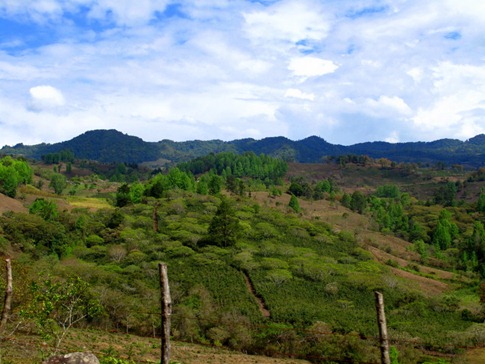
Between La Entrada and San Pedro Sula, the terrain opened up into farmland.

IMG_1805

IMG_1809

GPS has been essential for the past few weeks in El Salvador and Honduras. On the off chance a sign exists, half the time it’s blocked by a tarp from a market stall or a truck. We do our fair share of stopping to ask for directions too, but the locals typically just make wild sweeping gestures that imply a series of complicated turns while saying “Todo derecho” (all straight).

Communication is tricky in the caravan. We’ll swing onto the shoulder to allow Tree to come up beside us in the Sprinter to consult on the plan. Once we speed off in search of potholes, Chad will pull up beside the Sprinter, and Tree will tell him, “Dave told me not to tell you what’s happening.” On one occasion, Chad managed to yell, “GAS!” Understanding a sense of urgency to the request, we pulled into the next gas station.

It was after I’d told the attendant “lleno con super” and the nozzle was in the tank that I saw the first guy with a gun in his waistbelt. Standing beside a pickup with enough aftermarket hick-bling to make Kenny Chesney feel like a city slicker, he seemed friendly enough, but I was most concerned about the thirteen year old kid with the automatic rifle who appeared from the other side. It was clear that they were they to protect their boss.

With only a quarter of his morning beer left, he wore fancy jeans and a western shirt open just enough to show off his gold chains. The shine of his belt buckle was eclipsed by the polished handgun tucked in behind it. My mind remembers it as solid gold with intricate engravings and an ivory handle, but I can’t be sure. Of course, he made a beeline for me with a gold-toothed smile that could have just as easily said “Welcome to Honduras!” or “Say hello to my little friend.” Fortunately, it was the former, and with a lingering handshake, perhaps to prevent the screaming run he sensed building within me, he quickly offered, “I am not narco. I am not a killer.” As if he’s commonly asked to prove this claim, he handed me a clear plastic folder with a picture of him in a full US military dress uniform in front of an American flag. The only thing I could think to say was a phrase I heard frequently while growing up with a Mexican housekeeper; I looked appreciatively at the photo and said “Aye, que guapo,” basically, “Oh, how handsome.”

I busied myself with supervising the filling of my tank while the achy-breaky FARC turned his attention to Chad. 5 minutes later, Chad was still nodding appreciatively at his pictures which we later learned included helicopters and construction projects (“I build things. I do not destroy.”), as we sat with the engine idling and the truck pointed towards anywhere-but-there. When Emily approached them, he pulled his shirt over his gun and apologized to her, “Please excuse me, I am arm-ed.” The gas station security guard - because pretty much since Guatemala every gas station, grocery store and Pepsi delivery truck has had a dedicated guard carrying a shotgun – nervously edged over to where they were all standing, overwhelmingly outgunned but figuring it was his responsibility to keep an eye on the situation.

While the whole situation was amiable, we all felt like the wrong comment in response to one of his pictures combined with his growing buzz and ample firepower could have sent things spiraling. Once back on the road, our eyes scanned our rearview mirrors for the blue truck. Tree pulled up beside me and said, “We drive to the brewery, and we stop for nothing.” This time, he probably delivered the message word for word to Chad.

We’d heard about the D&D Brewery from the Bodes Well blog, the entertaining chronicles of a couple and their young son driving to South America in an old VW bus, and had been using it as a justification for our roundabout route through Honduras ever since. We’d all been drinking so much light lager on our way through Mexico (Pacifico, Indio, Victoria), Belize (Beliken), Guatemala (Gallo, Brahva), El Salvador (Pilsener, Golden) and Honduras (Salva Vida, Imperial) that we were willing to do just about anything for an amber ale. And so far, Honduras was testing our resolve.

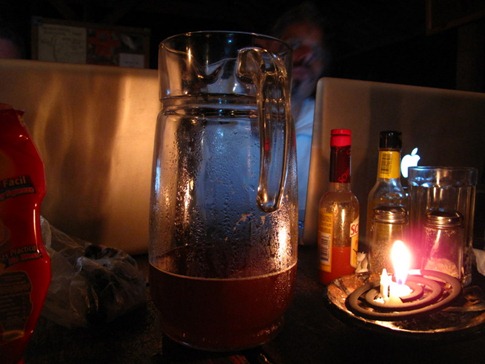
Amazed once again at how anyone drives in Central America without a GPS, the sharp angle southward onto CA-4 just below San Pedro Sula was completely unsigned. Not too far after, another unsigned side road led our caravan climbing through steep, curvy roads towards Lago de Yajoa. SprinterLife and PleasureDevice say they can tell immediately whether it’s me or Ann driving our truck; Eliminating all doubt, I roared up the hills and around the corners - to check the road ahead for obstacles I would later claim - knowing that I’d be able to catch a glimpse of my two white sheep on the next straightaway. This time, they didn’t come into view. We pulled over and waited. Still nothing. Of course, the moment we decided to turn around, they appeared, coming slowly. Tree yelled that the Sprinter had spewed a big cloud of white smoke and lost power before going into a controlled “limp mode” that wouldn’t let him go over 20 miles per hour. We’d all been pushed a little hard that day, and while the Sprinter would recover power as we approached the brewery, it wasn’t until the third pitcher of flat but delightfully opaque beer under the palapa roof of the brewery that the rest of us would wind down.

Note: We actually asked them to double check that they hadn’t given us a pitcher of the raspberry instead of the pale ale. Nope, that’s what the pale tastes like. Oh…

IMG_1806

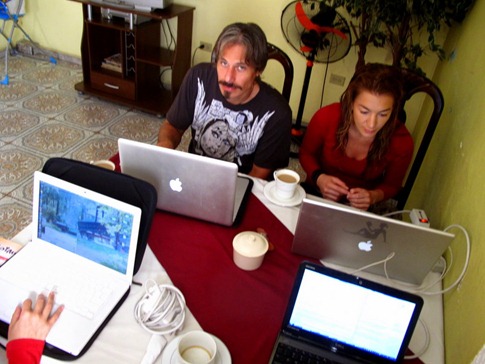
On the weak connection at the brewery, we searched Sprinter forums for answers while Tree sent emails to family back home who would call around to dealerships when they opened the next morning. The turbo resonator, a plastic part that muffles the high-pitched whine of the turbo, has been known to come apart at a seam in high heat, sending a failure message to the computer that hobbles the engine and emerged as a likely culprit. By morning, Tree had one of his guys at OutdoorPlay packing up the replacement part and heading to FedEx. With Mercedes-Sprinter dealerships few and far between in Central America, getting the part delivered to San Pedro Sula in a few days was the best way to get them back on the road and heading towards the Caribbean.

The next step was getting Tree comfortable with the installation. We downloaded a great set of instructions for a “turbo resonator eliminator,” an aluminum part developed by a third party to remedy this defect, and cobbled together the tools we needed from all of our toolkits. In nearby Pena Blanca, even the third and largest hardware store we found didn’t have the female T40 torx socket for a 1/4” ratchet we were looking for. One a positive note, if I ever need a “mujer Torx cuarenta socket con cabeza de un quarto,” I now know how to ask for it in Spanish.

After seeing us fumbling around for while, a smiling guy in jeans, a western shirt and a cowboy hat asked in broken English if we needed any help. We explained that if we could just find a quarter inch ratchet with a long handle, we’d be all set. He set the store in motion, first consulting with the heavily armed security guard and then a few people standing behind the counter in front of the warehouse. They all agreed they didn’t have what we needed. Our new friend then escalated our issue to another guy who motioned for me to follow him. He walked up to the warehouse counter and, in Spanish, told them to take me upstairs into the racks and let me look until I found what I was looking for.

Upstairs, just as I confirmed that they didn’t have it, a girl in her 20’s asked in Spanish if everything was okay. I answered that it was, but that we hadn’t found what we needed. My Spanish must have been awkward enough for her to ask “Do you speak English?” I said, “Yes” and followed with “and your English is really good.” “It should be,” she responded. “I’m American. I work in the stock room. If you need anything else, my name is April.” Pretty surprising for a small town in Honduras. We left with a small box wrench that seemed like it could get purchase on the Torx screw and a feeling like our impressions of Honduras were loosening as well.

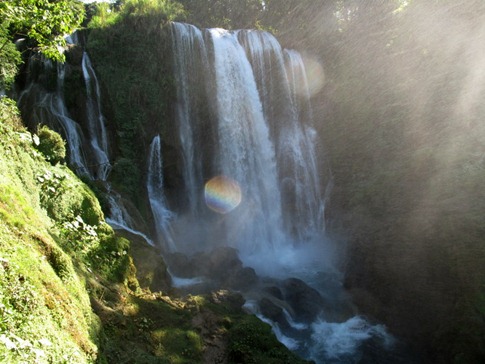
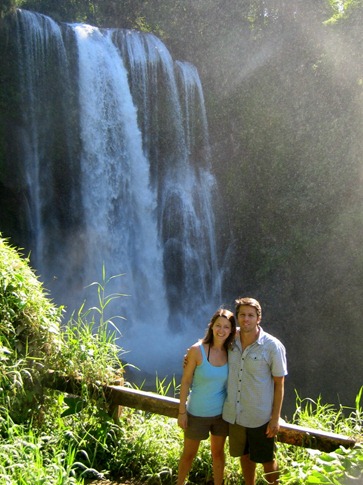
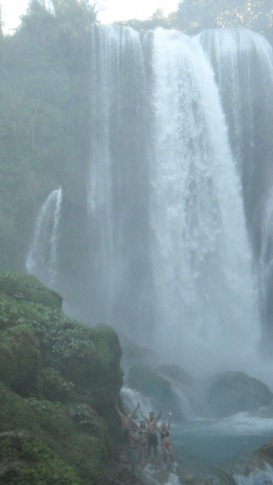
We made plans later in the day to go a waterfall we’d heard about, Catarata de Pulhapanzak. With the stress of the morning, work and uncertainty about whether to continue towards the Caribbean or stick with the caravan weighing on him, Tree decided to stay behind. The rest of us piled into PleasureDevice and hit the road.

IMG_0001

IMG_0004

IMG_0003

We’d been told by a young Canadian staying at the brewery that, even with a guide, the tour behind the waterfall was “a pretty intense 15 minutes.” After paying an entry fee, we walked down the path to an overlook, unsure how to even get down to the falls. Whether it was the talk of a tiny cave or the need to look down so you could breathe as you were pounded with water, Ann decided she’d stay behind and take pictures.

IMG_4388-1

IMG_0012

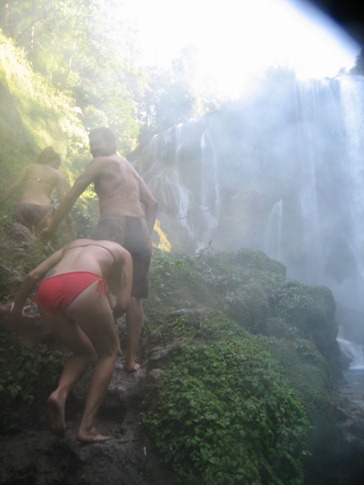
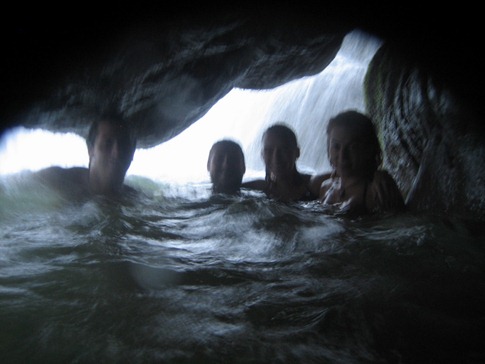
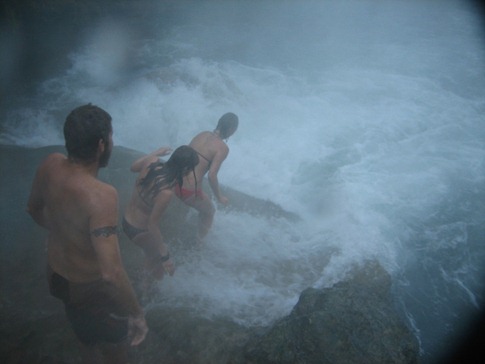
Chad, Emily, Stevie and I followed our guide, Alex, up the slippery, muddy path. He motioned to a pool 30 feet below on our right and said, “We’ll jump into that later.” Yeah, right buddy. After a jump into a smaller pool, the air thick with suffocating water vapor, and short section under a cascade that required holding our breath, I looked back at Chad and said, “Ann would not have liked this.” Wincing and squinting against the spray, Chad said, “I’m not sure I like this.”

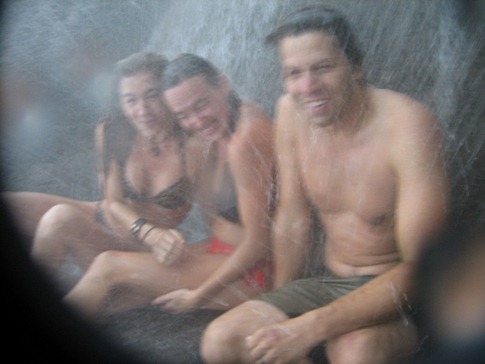
Our second backup camera, a small digital point and shoot that we’d brought thinking we’d donate it along the way, fit well in the waterproof case we bought for the other small camera that was stolen in El Salvador. The black “halo” on some of the shots below is from the waterproof lens window.

IMG_0015

IMG_0031

IMG_0041

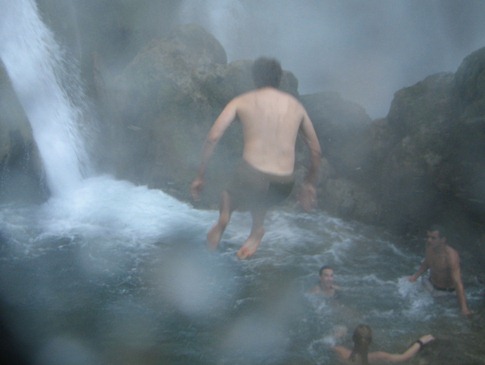
We swam and scrambled through a few more pools with the water coming heavier and heavier as we approached the main falls. At this point, we had to remember Alex’s advice about looking down to create a pocket of air so we could breathe in between comments of “Oh my God, they should not let people do this.”

If you didn’t keep a close eye on the person in front of you, there was a moment where you couldn’t tell exactly how they gotten over the next 2-3 foot section of grippy but sloping rock. To your right, the falls dropped 15 feet into a churning cauldron; Above, water fell from the lip 200 feet above, crashing on rocks as it went, sending drops flying from all directions.

IMG_0082

IMG_0049

IMG_0073

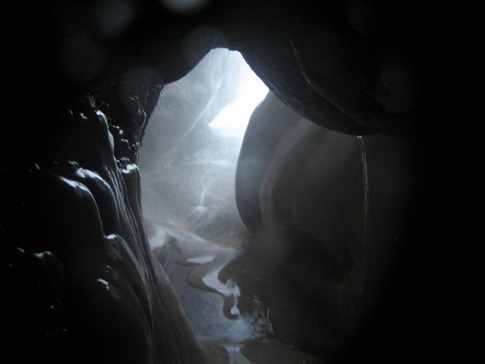
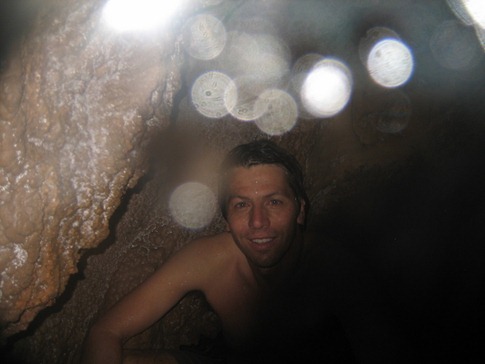
The four of us followed Alex into a cave that required a slippery crawl through a tight entrance of smoothed rock.

IMG_0066

IMG_0059

IMG_0069

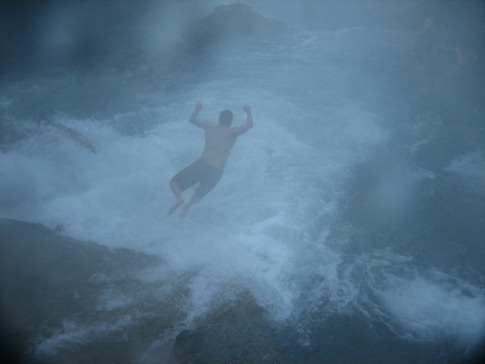
Two more jumps into pools, each higher than the last, and we climbed onto an island of rock in the throat of the waterfall’s drainage. Here the water vapor was blowing by us horizontally, making us feel like weather reporters sent to eyewall of a hurricane.

IMG_0158

IMG_0159

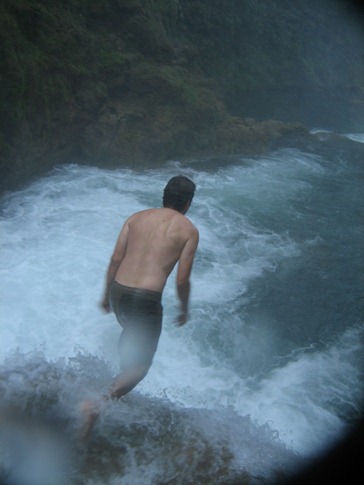
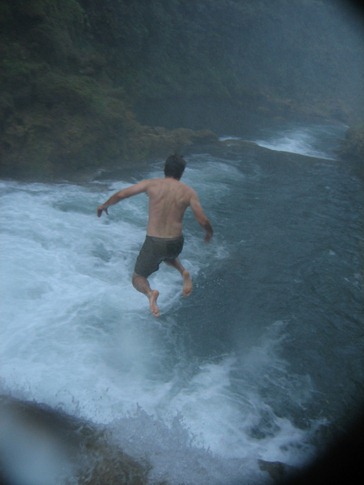
Then Alex dove off the final rock ramp and into the rushing current. One by one, we followed.

IMG_0091

IMG_0111

You couldn’t help but feel like you’d survived something.

IMG_0119

DSCN3034

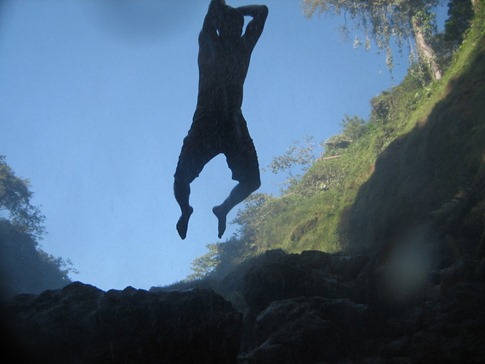
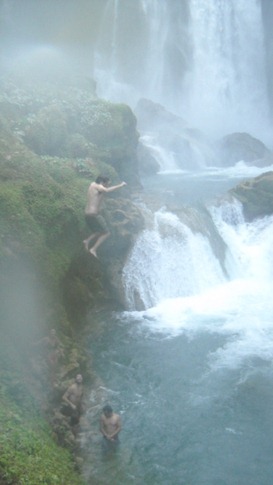
As we climbed waterlogged back up the steep, slippery slope, we again reached the point we’d passed on the way in. Alex stepped to the edge and jumped the 30 feet to the pool below, motioning us to follow. All of a sudden, it didn’t seem that crazy. With Ann snapping pics from the overlook, we each took the plunge.

DSCN3042

A little video of the tour…

And a swim above the falls.

IMG_4394

We returned to the brewery to find Tree emerging from under the open hood of the Sprinter, hands covered in grease and the hair of a mad scientist. In his hand was a zip lock bag with a brand new turbo resonator. I mean, I knew OutdoorPlay had great service and speedy international shipping, but this was ridiculous! He explained that before they’d left for the trip, he’d gone to the local Mercedes-Sprinter dealership and said, “Give me one of everything you’ve replaced on a Sprinter.” $1000 later, he had a roof box full of parts, many of which he hadn’t even looked at but knew just might come in handy some day. Well, today was that day, and after we left, he remembered about the box and figured he’d take a look. We had it installed 10 minutes later.

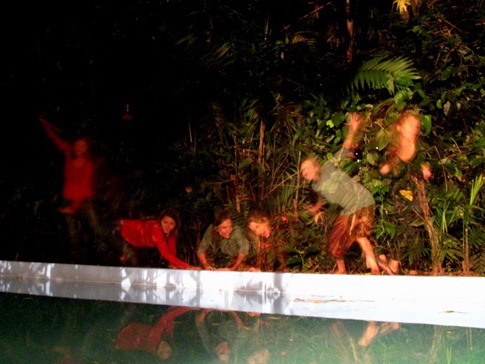
The pitchers flowed again that night, inspiring some experimental photography. Below are the ones I could post. And it wasn’t until morning that we learned that after a plea from the ones who gave SprinterLife life, their parents, they decided not to risk another breakdown alone on the Caribbean coast and continue on with us towards Nicaragua.
IMG_1845

IMG_1858

IMG_1842

Saturday, February 26, 2011

Copan

A “Banana Republic” is a state installed largely for the benefit of a tight group of, usually foreign, corporations. The tropical climate along the northern coast of Honduras is perfect for banana plantations, and in the early 1900’s, American companies bought up huge amounts of land and developed railroads to bring the fruit to port for shipment to the US. To protect these investments, Honduras became the model of the Banana Republic. How that lead to selling skinny jeans and playing infuriating remixes of Christmas songs at deafening volumes from Halloween to Valentine’s Day is anybody’s guess.

Before this trip, I tended to think of all Central American countries as dense jungles of bananas and palm trees. In fact, the region of northern El Salvador and the western highlands of Honduras at times look more like the foothills of the Sierra Nevada in California. Unfortunately, unchecked logging and clearing for livestock has decimated much of the forest.

IMG_1698

IMG_1701

IMG_1716

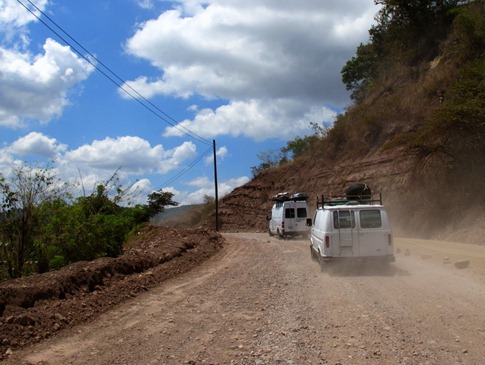
After crossing into Honduras at El Poy, our caravan had been hoping to reach the Mayan ruin site at Copan. We’d been told it was about 3 hours from the border, but as soon as we saw the condition of the roads, all estimates went out the window. Huge potholes a foot deep pocked the pavement, threatening to swallow up an entire wheel. Rippling “hundimientos” were linear sink holes that looked like the road had melted and slipped a few feet in either direction and required careful navigation of the resulting gully of strained roadway. And at times, the pavement disappeared altogether, either finally becoming more pothole than road or having been stripped away during a repair project that may or may not still be underway. When the sky opened up with a torrent of thick rain, we just had to laugh; Welcome to Honduras.

IMG_1708

IMG_1750

IMG_4225_Tree

After not too long, we came to our first police checkpoint, and all three vehicles were flagged over. “Here we go,” Ann said from the passenger seat. I wasn’t ready to assume the worst yet and greeted the officer, dressed in the all black Honduran police uniform with tall leather boots and a short-brimmed cap that have a distinctly military feel, in Spanish as he approached my window. He shook my hand and flashed a toothy grin, two things common to all stories I’ve heard about police shakedowns.

It’s a bit of an ongoing debate as to whether an actual law exists, but a prepared overlander knows that Honduran police officers will ask gringos if they have orange safety triangles and/or a fire extinguisher. When an unsuspecting target says “I need to have a what?” there’s a song and dance about a fine that has to be paid at the police station many miles away which leads to the generous offer from the officer to personally accept a smaller fine on the spot. Not only did we have safety triangles and a fire extinguisher, we were prepared to convincingly agree to pay any fine at the police station, thus calling the bluff and making it not worth the cop’s effort.

But after requesting our passports, this cop asked us a question in Spanish that we didn’t immediately understand. Through some miming and pointing up at a nearby streetlight, we figured out that he was asking if we had a flashlight and assumed this was the latest evolution of the triangle scam. I reached down beside my left leg and grabbed the large rechargeable Maglite mounted in a charging cradle on the door to show to him.

IMG_4249_tree

“Necesito un roko,” he said, eyes lighting up at the long, black cylindrical metal body of the Maglite that is pretty much the standard issue for law enforcement in the US. Our new vocab word for the day was “roko,” a flashlight.

I held it up again. Yes, I understand that we need to have a flashlight and here it is.

“Necessito un roko,” he tried again.

Wait, did he say “necessita” or “necessito” that time? Is he saying we need a flashlight or he needs one?

All doubt faded when he said “Regalemelo?” (Will you give it to me?)

In that instant, we apparently stopped understanding all Spanish and began responding to everything he said with an apologetic “No entiendo” (I don’t understand) and a shoulder shrug. He looked back and forth between us, searching for a glimmer of comprehension as he repeated his request a few times and got only an alternating chorus of “No entiendo” back. I thought I blew it when he asked in Spanish if we had a pen; Without thinking, I turned, opened the center console and got one for him. He didn’t seem to notice my momentary language recovery and instead, wrote very carefully on his hand, “Yo necessito un roko.” We looked at him like he’d written in Chinese. He smiled a “You can’t blame a guy for trying” smile and waved us on. I’d decided not to expect the worst from Honduran cops, but the next one who comes to the window will be greeted with a big ol’ “Howdy, pardner! Y’all sure do talk funny in these here parts.”

With our progress a little slower than planned and a lengthy border crossing, we adjusted our goal from the charming, cobbled town of Copan Ruinas, just outside the archeological site, to the busy, dirty crossroads of Santa Rosa de Copan a couple hours short. Leading our caravan of various sizes through the tight streets of the old town, we pulled into the first hotel we found with a large, fenced lot. Despite dark, cramped rooms with paper thin walls and twin size fitted sheets on full beds, we managed to make ourselves at home.

IMG_1730

IMG_1749

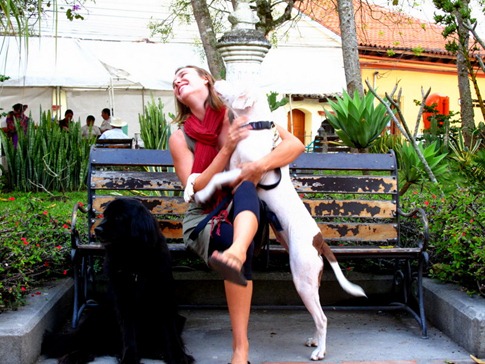
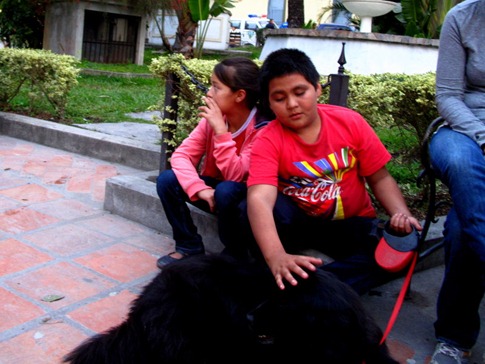
From the heads turning in the central square, I’m guessing Santa Rosa de Copan doesn’t get much gringo traffic, though they were most interested in the two dogs on leashes. Dogs, as pets! Imagine! A few local kids cautiously approached Kiki, more teddy bear than dog, asking “Muerde?” The verb for “bite” and “kill” are only one letter apart, so I always think kids are asking “Does your dog kill?”

IMG_1734

IMG_1739

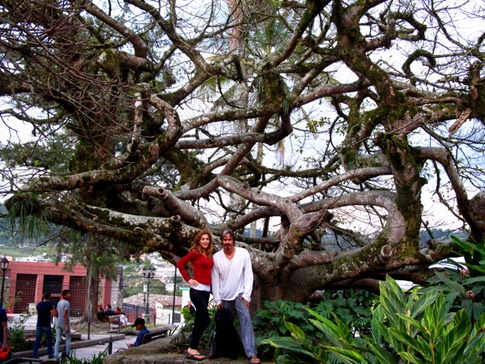
Tree and Tree and Stevie

IMG_1740

Emily with Luna

IMG_1743

You can pet dogs???

IMG_1746

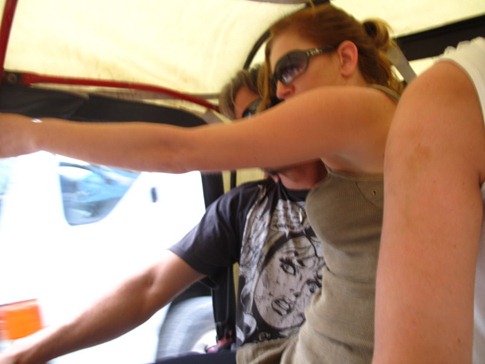
The town of Copan Ruinas, just across the border from Guatemala, is a popular day trip Antigua. Despite tons of hotels, hostels and restaurants catering to tourists, it was actually quite a cool little town. Soon after crossing the narrow bridge into town, a tuk-tuk driver attached himself to us and insisted on leading us around to a few hotels. With parking for the Sprinter a primary concern, we accepted his help and settled in at a nice, 10 room hotel surrounding a pool on the top of a hill overlooking the town. We also arranged our helper to bring us back to the ruins a little later in the day. With a set rate of $2 per person, I’m still unclear on why we all decided to squeeze into the back seat of a single tuk-tuk.
IMG_1753 IMG_1751

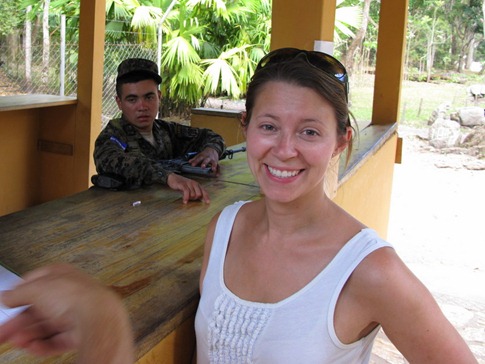
Ann felt particularly safe at the entrance gate with her friend, the 15 year-old kid with a huge gun.

IMG_4283_tree

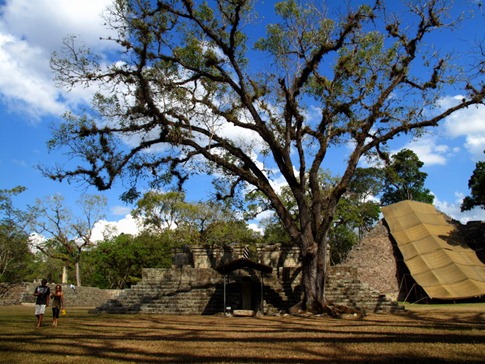
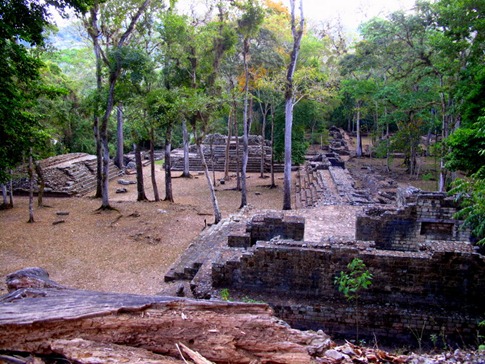
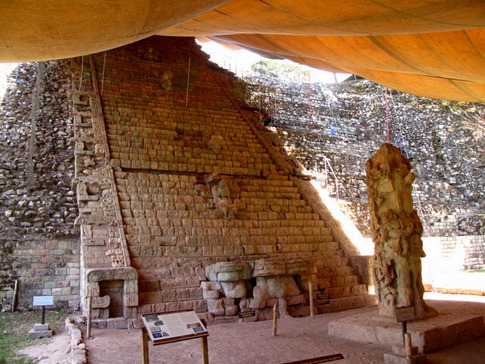
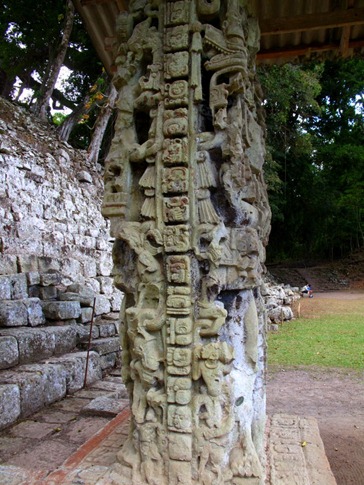
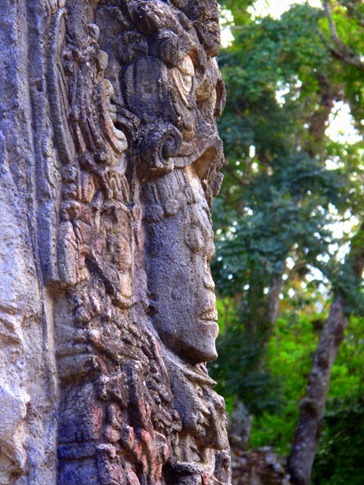
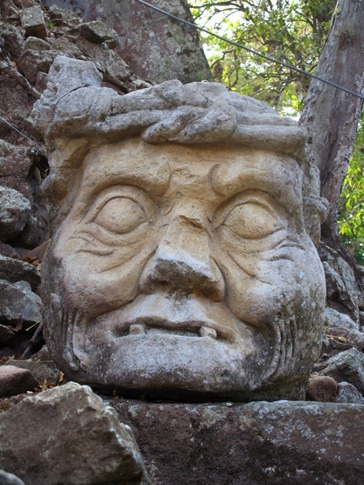
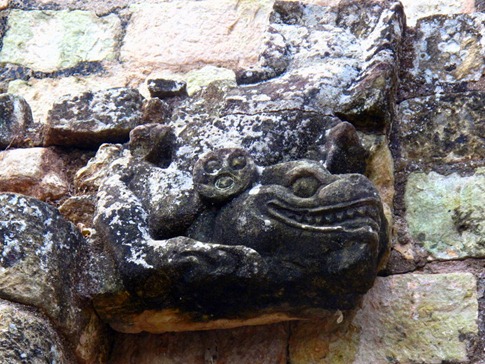
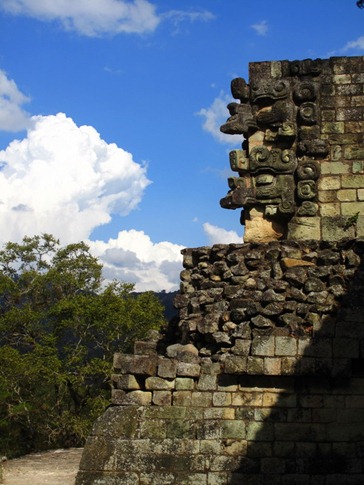
The ruins at Copan are more known for their intricate stone carvings than the size of the city or scale of the ruins. While we’ll admit to being a bit “ruin saturated,” the tightly-packed site, much of it still only peaking from the hillsides into which it was built and subject to the whims of the massive roots of the huge Ceiba trees that grow all around it, had something of an “Indiana Jones” feel as we chose our own paths up and down the huge stone stairways.

IMG_1760

IMG_1762

IMG_1773

IMG_1779

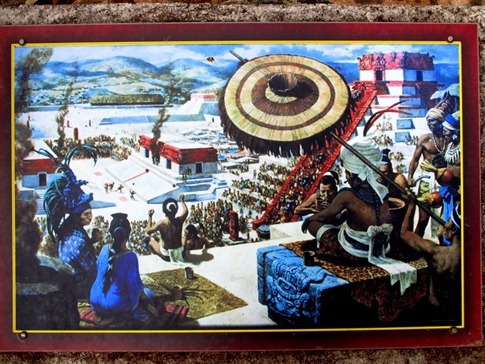
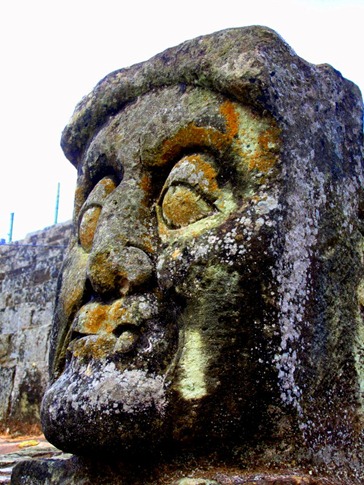
The stonework, from carved decorative features to expressive, oversized heads, is the main attractions of the site. This “Hieroglyphic Staircase” can be seen in an artist’s rendering below. 

IMG_1767

IMG_1771

IMG_1768

IMG_1785

IMG_1777

IMG_1790

IMG_1789

IMG_1791

IMG_1775

IMG_1787

But the massive Ceiba trees with branches at least 4 feet in diameter coming off huge trunks and the wide roots finning out to support it all were just as interesting.

IMG_1770

IMG_1788

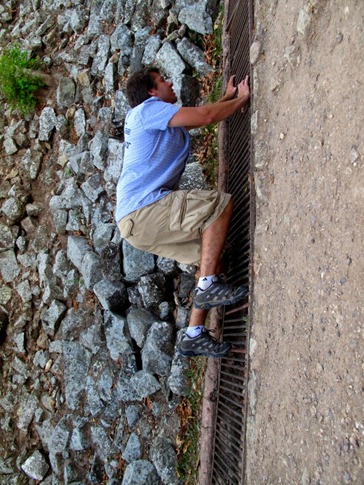
it’s amazing the places they’ll let you go in these ruins.

IMG_1783

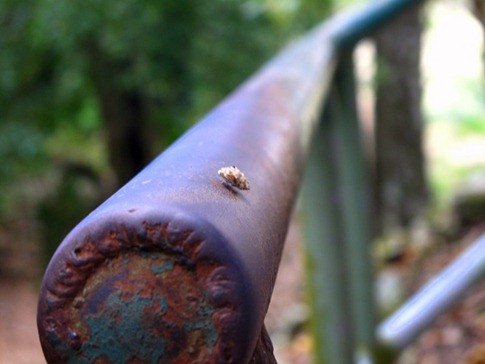
This little bug had created a camouflaged crust of sand and thought he was invisible even on this railing.

IMG_1792

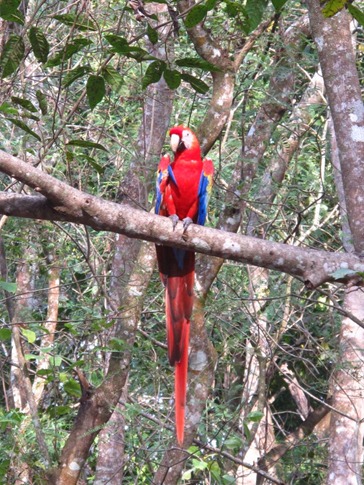
Five or six Scarlett Macaws roamed around near the entrance.

IMG_1796

From Copan, we’ll continue north on the main road towards San Pedro Sula before cutting down to Lago de Yojua. From there, the Nicaragua border should be a 5 hour drive through Tegucigalpa, and we’ll know whether our detour through Honduras has paid off.